Wikipedia hat in dieser Sprache noch keinen Artikel über diesen Autor. Unten der Text auf Englisch.
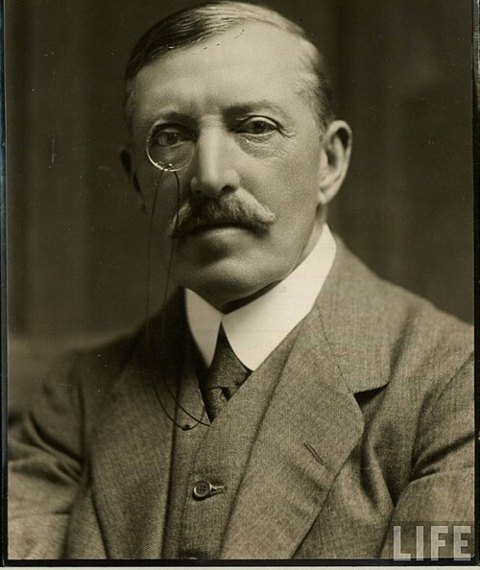
Charles Garvice (24 August 1850 – 1 March 1920) was a prolific British writer of over 150 romance novels, who also used the female pseudonym Caroline Hart. He was a popular author in the United Kingdom and the United States, and his work was translated around the world. He was ‘the most successful novelist in England’, according to Arnold Bennett in 1910. He published novels selling over seven million copies worldwide by 1914, and since 1913, he was selling 1.75 million books annually, a pace which he maintained at least until his death. Despite his enormous success, he was poorly received by literary critics, and is almost forgotten today.
Early life
Charles Andrew Garvice was born on 24 August 1850 in or near Stepney, London, England. His parents were Mira Winter and Andrew John Garvice.
Career
Garvice got his professional start as a journalist. His first novel, Maurice Durant (1875), was marginally successful in serialized form, but when published as a novel, it was a "dismal failure". He concluded it was too long and too expensive for popular sales - this early experience taught him about the business side of writing. He would spend the next 23 years writing serialized stories for the periodicals of George Munro. Magazine stories included A Modern Juliet, Woven in Fate's Loom, On Love's Altar, His Love So True, and A Relenting Fate. The unexpected success of Just a Girl (1895) in America brought him attention in the UK and encouragement to resume his career as a novelist - from then on, every novel he published became a best-seller in England. He reworked many of his magazine stories as novels, and by 1913, Garvice was selling 1.75 million books annually, a pace which he maintained at least until his death. Garvice published over 150 novels, selling over seven million copies worldwide by 1914. Just a Girl was filmed in 1916. According to Garvice's agent Eveleigh Nash, Garvice's books were as "numerous in the shops and on the railway bookstalls as the leaves of Vallombrosa." He was 'the most successful novelist in England', according to Arnold Bennett in 1910.