Wikipedia hat in dieser Sprache noch keinen Artikel über diesen Autor. Unten der Text auf Englisch.
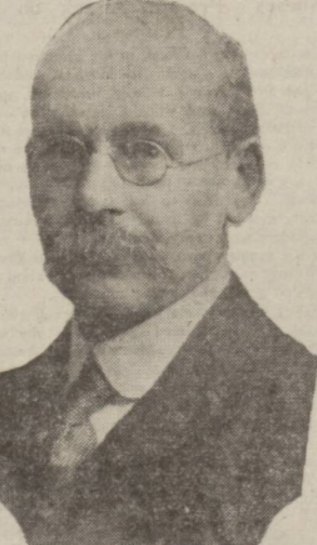
John Nicol Farquhar (6 April 1861 – 17 July 1929) was a Scottish educational missionary to Calcutta, and an Orientalist. He is one of the pioneers who popularised the Fulfilment theology in India that Christ is the crown of Hinduism, though, Fulfilment thesis in Bengal was built on foundation originally laid in Madras by William Miller.
He authored several books on Hinduism, notably, The Crown of Hindustan, A Primer of Hinduism, Gita and Gospel, and many alike.
Biography
Farquhar was born at Aberdeen in 1861. He was educated at Aberdeen Grammar School and Aberdeen University and served an apprenticeship as a draper, but he returned to school at an age of 21, and finished his studies at Oxford University. With no prior ordination, he was recruited by London Missionary Society as a lay educational missionary and sent to India in 1891.
He arrived at Calcutta and started his missionary work by teaching at Bhowanipur for eleven years from 1891. He joined Young Men's Christian Association (YMCA) in 1902 as a national student secretary; later, as a literary secretary, a post which he held until 1923. While working at YMCA, he strived to enable the association to widen its appeal to students through lectures, through personal friendships, and through production of whole new body of literature of the highest grade that India had ever known before.
Due to ill-health, he left India in 1923. He spent last six years of his life working as a professor of comparative religion in the University of Manchester. He died in Manchester in 1929.