Wikipedia hat in dieser Sprache noch keinen Artikel über diesen Autor. Unten der Text auf Englisch.
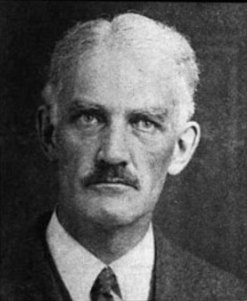
James Henry White (March 1872 – 1944) was a Canadian film pioneer, who worked as a director, producer, and cinematographer. He also appeared as an actor in several films. He was employed by the Edison Manufacturing Company as Production Head from 1896 to 1902, and directed over 500 short films, both fictional and documentary often with no functional story or script, just scenes or vignettes. White proved prolific and tried to be lyrical in some of his short films, for example Return of a Lifeboat (1897) and A Storm at Sea (1900) the latter of which was shot on a passenger ship with the camera catching some of the glimmer from the sun.
Biography
James H. White was born in Nova Scotia in March 1872. He married Pauline Dede on November 29, 1902.
He died in 1944.
Career
Various of his films are extant. The 1896 film T. A. Edison by Blackton features a cartoonist drawing Thomas Alva Edison. His 1896 film Watermelon Eating Contest features two African American men seated and devouring large slices of watermelon. His 1898 film Indian Day School is set at what a sign in the film says is the Isleta Indian School in New Mexico. Fifth Avenue, New York and Sunday Morning in Mexico show pedestrians passing by. He filmed rapids from a passing train. He filmed aboard a ship in Newport. He filmed along the Seine River.
He filmed a washing room prank. He filmed a Boer cavalry charge and "Rough Riders" in action. He filmed bears dressed up and performing.
Films shot in Hong Kong
In 1898, the Edison Company sent White to China, after which he travelled to Japan. In February of that year, he sailed from Yokohama to Hong Kong. Fourteen of White's films can be found in Hong Kong Film Archive, where six of them were shot in Hong Kong and all exactly one reel in length. These films captures the everyday life of the Hong Kong people and are important records. They are: