Wikipedia hat in dieser Sprache noch keinen Artikel über diesen Autor. Unten der Text auf Englisch.
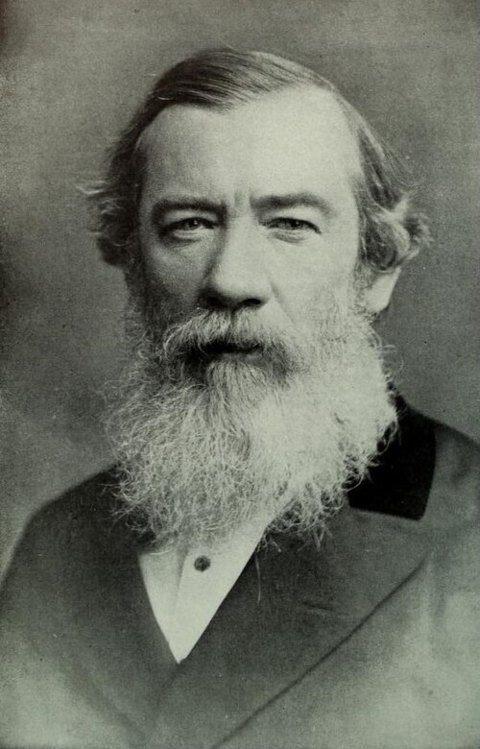
Moncure Daniel Conway (March 17, 1832 – November 15, 1907) was an American abolitionist minister and radical writer. At various times Methodist, Unitarian, and a Freethinker, he descended from patriotic and patrician families of Virginia and Maryland but spent most of the final four decades of his life abroad in England and France, where he wrote biographies of Edmund Randolph, Nathaniel Hawthorne and Thomas Paine and his own autobiography. He led freethinkers in London's South Place Chapel, now Conway Hall.
Family
Conway's parents descended from the First Families of Virginia. His father, Walker Peyton Conway, was a wealthy slave-holding gentleman farmer, county judge, and state representative; his home, known as the Conway House, still stands at 305 King Street (also known as River Road), along the Rappahannock River. Conway's mother, Margaret Stone Daniel Conway, was the granddaughter of Thomas Stone of Maryland (a signer of the Declaration of Independence), and in addition to running the household, also practiced homeopathy, learned from her doctor father. Both parents were Methodists, his father having left the Episcopal church, his mother the Presbyterian, and they hosted Methodist meetings in their home until a suitable church was finally built in Fredericksburg. An uncle, Judge Eustace Conway, advocated states' rights in Virginia's General Assembly (as did Walter Conway). Another uncle, Richard C.L. Moncure, served on what later became the Virginia Supreme Court, was a layman in the Episcopal Church, and became known for his integrity and hatred of intolerance. His great-uncle, Peter Vivian Daniel, served on the United States Supreme Court, where he upheld slavery and the Fugitive Slave Act of 1850, including in the Dred Scott Decision of 1857.