Η Βικιπαίδεια δεν έχει ακόμη άρθρο για αυτόν τον συγγραφέα σε αυτή τη γλώσσα. Παρακάτω, το κείμενο στα αγγλικά.
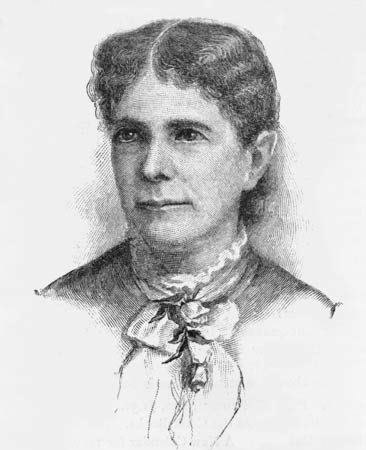
Adeline Dutton Train Whitney (pen name, A. D. T. Whitney; September 15, 1824 – March 20, 1906) was an American poet and writer who published more than 20 books for girls. Her books were popular throughout her life.
Her first venture was a Book of Rhymes. Then followed: Mother Goose for Grown Folks, Boys at Chequassett, Faith Gartney's Girlhood, Hitherto — a Story of Yesterday, Prince Strong's Outings, The Gayworthys, Leslie Goldthwaite, We Girls, Holy Tides, Real Folks, The Other Girls, Sights and Insights, Odd and Even, Bannyborough Whiten Memories, Daffodils, Pansies, Homespun Yarns, Ascutney Street, A Golden Gossip, Bird Talk, and Just How.
Early life and education
Adeline Dutton Train was born in Boston, Massachusetts, September 15, 1824. She was the daughter of Enoch Train and Adeline Train (née Dutton). With his cousin, Samuel Train of Medford, Enoch did an extensive mercantile business, owning vessels, and trading to Russia and South America. In later years, he established his line of packet ships between Boston and Liverpool, thereafter known as the "Warren Line". George Francis Train, a founder of the Union Pacific Railroad, was her cousin.
When she was thirteen, her mother presented Whitney with a complete set of the stories of Maria Edgeworth, and gave her permission to read them. Edgeworth's works proved influential on Whitney's later writings.
Most of Whitney's education was conducted in Boston. She attended the school of George B. Emerson from the age of thirteen through eighteen, from 1837 to 1842, with the exception of one year spent at Northampton, under the care of Margarette Dwight. Emerson was a Unitarian; Dwight was a Calvinist. In those days, there was an excited controversial division between the Unitarian and the Orthodox. Of this she said:— "After what has been said, incidentally, concerning alternating religious training and influences, I may suitably say that the result of all has been that I have recently connected myself with the church of the 'Apostles' Creed,' finding there the germ and foundation of all that has either broadened or narrowed from it; and am content to rest in that body which recognizes 'the blessed company of all faithful people,'—claiming the right to interpret those words with all the liberalism which they imply."