Η Βικιπαίδεια δεν έχει ακόμη άρθρο για αυτόν τον συγγραφέα σε αυτή τη γλώσσα. Παρακάτω, το κείμενο στα αγγλικά.
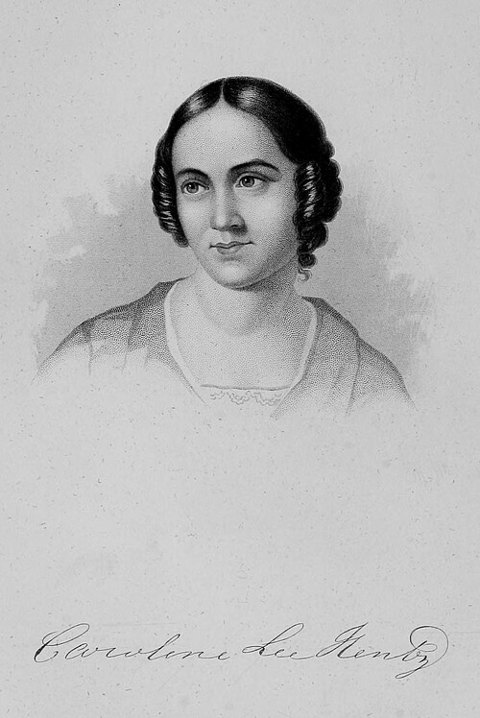
Caroline Lee Whiting Hentz (June 1, 1800 – February 11, 1856) was an American novelist. She is most noted for her defenses of slavery and opposition to the abolitionist movement. Her widely read The Planter's Northern Bride (1854) was one of the genre known as anti-Tom novels, by which writers responded to Harriet Beecher Stowe's bestselling anti-slavery novel, Uncle Tom's Cabin (1852).
Early life
Caroline Hentz was born as Caroline Lee Whiting on June 1, 1800, to Colonel John and Orpah Whiting in Lancaster, Massachusetts. The youngest of eight children, her father served as a Continental Army soldier in the American Revolutionary War and three of her brothers fought in the War of 1812.
As a child, Whiting attended a private school run by Jared Sparks. By the time she was twelve, she had already composed a fantasy about the Far East, as well as a play. At seventeen she was teaching at a local Lancaster school.
On September 30, 1824, Caroline married Nicholas Marcellus Hentz. Shortly after, the couple moved to Chapel Hill, North Carolina with their first child, where her husband became chair of modern languages at the University of North Carolina. She is described as being "a northerner who traveled and worked throughout the South for nearly thirty years." She lived in seven different states in her lifetime, had five children, and supported her family financially with her writing.
Personal life
As the youngest of eight children, Hentz watched as “three of her brothers became officers and served in the War of 1812.” Their letters home and “tales of patriotic adventure” were great inspiration to her. As a young girl, she was “popular with her companions, playing games, taking woodland walks, and studying nature.”