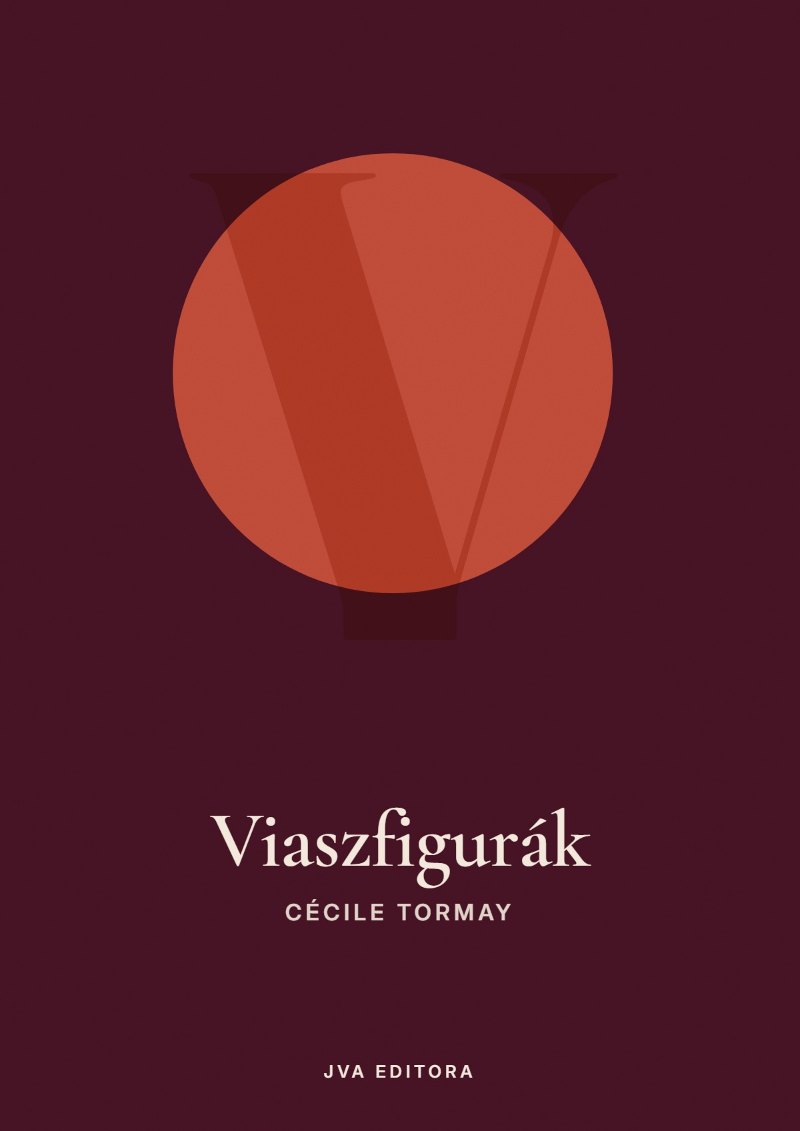
Η Βικιπαίδεια δεν έχει ακόμη άρθρο για αυτόν τον συγγραφέα σε αυτή τη γλώσσα. Παρακάτω, το κείμενο στα αγγλικά.
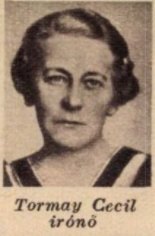
Cécile Tormay (8 October 1875 or 1976 – 2 April 1937) was a Hungarian writer, intellectual, far-right political activist, literary translator, and social theorist.
Early life
Tormay was born in Budapest into a German speaking family that assimilated into Hungarian culture. Her father, Béla Tormay (1839-1906), was widely recognized as an expert on agriculture. He served as a member of the Hungarian Academy of Sciences and a State Secretary. A private student, Cécile studied literary works in German, Italian, French and Latin. She translated the Little Flowers of St. Francis of Assisi into Hungarian.
Literary career
Her first two novels were People of the Rocks (Emberek a kövek között, 1911) and The Old House (A Régi ház, 1914). She also wrote five short stories. Her best known work is 1923's Bujdosó könyv, which is translated literally as The Proscribed Book, but an English translation was published as An Outlaw's Diary. It provides a hostile account of the 1918–1919 revolution and the subsequent Hungarian Soviet Republic led by Béla Kun. She also bemoaned the division of the Kingdom of Hungary which led to territorial concessions to the Kingdom of Romania. This book is cited as evidence of Tormay's antisemitism as she claims that "The demon of the revolution is not an individual, not a party, but a race among the races. The Jews are the last people of the Ancient East who survived among the newer peoples of shorter history."
She was nominated and considered for the Nobel Prize in Literature in 1936. Nobel committee member Fredrik Böök pushed for a prize to Tormay, arguing that "her writing is of exceptionally high value. (...) I cannot currently find any choice that is more satisfactory and urgent", but her candidacy was ultimately passed over by the Nobel committee.