Η Βικιπαίδεια δεν έχει ακόμη άρθρο για αυτόν τον συγγραφέα σε αυτή τη γλώσσα. Παρακάτω, το κείμενο στα αγγλικά.
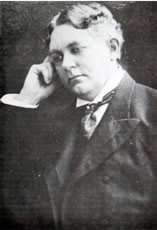
Charles Major (July 25, 1856 – February 13, 1913) was an American lawyer and novelist.
Biography
Major was born on July 25, 1856, in Indianapolis. Born to an upper-middle class Indianapolis family, Majors graduated from the old Shelbyville High School which then like most other colleges, universities and even down to the growing early secondary schools / high schools in that 19th century era emphasized Classical and European history and ancient languages as part of the academic curriculum. In 1872 Major attended the adjacent state University of Michigan at Ann Arbor for three years, and after an apprenticeship in the law practice of his father, and successfully completing the required examinations here, was admitted to the Indiana Bar and its bar association in 1877. Shortly thereafter he opened his own law practice, which also launched a short political career, culminating in a year-long term in the Indiana General Assembly (state legislature) at the Indiana Statehouse (state capitol) in Indianapolis.
Writing fiction remained an interest of Major, and fifteen years later at age 42, he published his first novel in 1896, When Knighthood Was in Flower under the pseudonym / pen name of Edwin Caskoden. The novel about old medieval Kingdom of England in the 16th century during the reign of King Henry VIII (1491–1547, reigned 1509–1547). It was an exhaustively extensively researched saga of historical fiction and romantic fiction, and soon became enormously popular, holding a place on several bestselling published book lists for nearly three years in the late 1890s. The novel was adapted into a popular Broadway play in New York City by popular noted playwright Paul Kester (1870–1933) for the turn-of-the-century stage in the 1901 season, premiering at the Criterion Theatre that year. The novel also launched relatively several subsequent successful film adaptations in the silent film format (up to 1927–1928), first in the earlier Nickelodeon era of shorter flicks in 1908 and again a second time with longer more developed plot by the 1922 version.