Η Βικιπαίδεια δεν έχει ακόμη άρθρο για αυτόν τον συγγραφέα σε αυτή τη γλώσσα. Παρακάτω, το κείμενο στα αγγλικά.
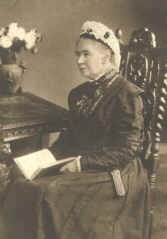
Deborah Alcock (1835– 15 January 1913) was a late-Victorian author of historical fiction focused on religious, evangelical themes.
Life
She was born in Kilkenny, where her father, the Venerable John Alcock, who became Archdeacon of Waterford, and his wife Jane. In the 1851 Isle of Man Census, the fifteen-year-old Deborah is recorded as living on the Isle of Man with her parents, aunt Sally McKenny, cousins nineteen-year-old Deborah Barllie and thirteen-year-old Barbara Gose, and two servants.
Reflecting on her childhood, Alcock described having read narratives of saintly children who died young as well as stories detailing missionary outreach to unconverted heathen. However, her father discouraged fiction reading, banning the works by the likes of Elizabeth Gaskell, Charlotte Mary Yonge, Charlotte Brontë, George Eliot, or George McDonald. However, she was allowed to read novels by Sir Walter Scott, which shaped the theme and style of her writing as she grew older.
In adulthood, she lived with her father, writing a memoir of him on his death entitled Walking with God: A Memoir of the Venerable John Alcock (Hodder & Houghton, 1898), and stayed unmarried herself. In the 1891 England Census, she and a Caroline G. Cavendish listed as currently visiting an Irish friend from Cork, Martha A. Lloyd at 143 Clapham Road, Lambeth, London. In the England Census for 1901, she and her widowed cousin Mary Smith are located at Bournemouth, Dorset. In 1900, The Sunday at Home, a periodical published by the Religious Tract Society, interviewed Alcock at her home in Bournemouth, revealing her frequent bouts of illness and constant excitement about writing.