Η Βικιπαίδεια δεν έχει ακόμη άρθρο για αυτόν τον συγγραφέα σε αυτή τη γλώσσα. Παρακάτω, το κείμενο στα αγγλικά.
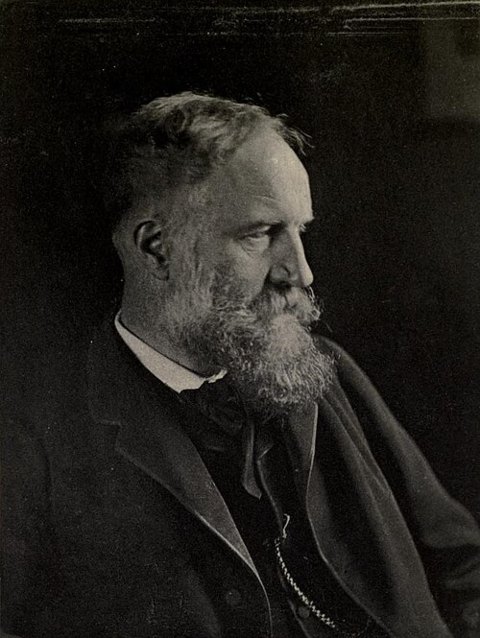
Philip Gilbert Hamerton (/ˈhæmərtən/; 10 September 1834 – 4 November 1894) was an English artist, art critic and author. He was a keen advocate of contemporary printmaking and most of his writings concern the graphic arts. He was an important theorist of the English Etching Revival.
Early life
Hamerton was born at Laneside, a hamlet near Shaw and Crompton, Lancashire, England. His mother died giving birth to him, and his father died ten years later. When he was about five, he was sent to live with his two aunts at an estate called the Hollins on the edge of Burnley, where he attended Burnley Grammar School.
Career
Hamerton's first literary attempt, a volume of poems, was unsuccessful, leading him to devote himself for a time entirely to landscape painting; he camped out in the Scottish Highlands, where he eventually rented the former island of Inistrynich in Loch Awe. In 1858, Hamerton married Eugénie Gindriez, the daughter of a French republican magistrate, and they remained married until his death in 1894.
Discovering after a time that he was more suited to art criticism than painting, he moved to Sens and later to Autun, where he produced his Painter's Camp in the Highlands (1863), which was very successful and prepared the way for his standard work on Etching and Etchers (1866). In the following year he published Contemporary French Painters, and in 1868 a continuation, Painting in France after the Decline of Classicism.
He had by now become art critic to the Saturday Review, which necessitated frequent visits to England, forcing him to give it up. He proceeded in 1870 to establish and edit an art journal of his own, The Portfolio, a monthly periodical, each number of which included of a monograph upon some artist or group of artists, often written by him. The journal championed printmaking, especially etching. He selected and wrote the accompanying text for Etchings by French and English Artists (London: Seeley, 1874) which included work by Alphonse Legros and Léon Gaucherel. The discontinuation of his painting gave him time for writing, and he successively produced The Intellectual Life (1873), perhaps the best known and most valuable of his writings; Round my House (1876), notes on French society by a resident; and Modern Frenchmen (1879), admirable short biographies. He also wrote two novels, Wenderholme (1870) and Marmorne (1878).