Η Βικιπαίδεια δεν έχει ακόμη άρθρο για αυτόν τον συγγραφέα σε αυτή τη γλώσσα. Παρακάτω, το κείμενο στα αγγλικά.
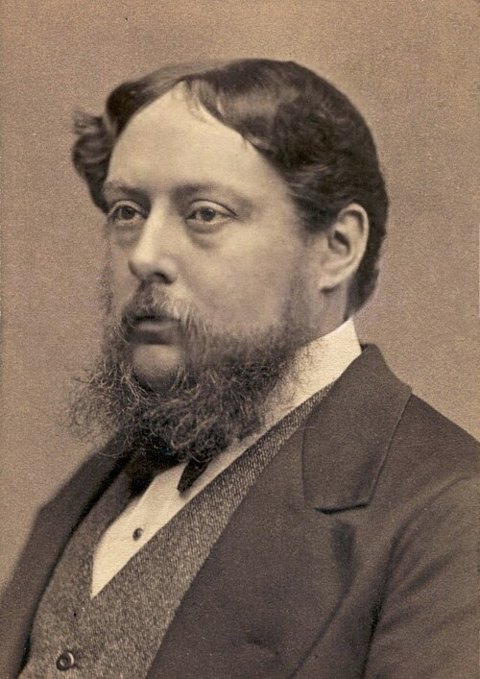
Richard Anthony Proctor FRAS (23 March 1837 – 12 September 1888) was an English astronomer. He is best remembered for having produced one of the earliest maps of Mars in 1867 from 27 drawings by the English observer William Rutter Dawes. His map was later superseded by those of Giovanni Schiaparelli and Eugène Antoniadi and his nomenclature was dropped (for instance, his "Kaiser Sea" became Syrtis Major Planum).
He used old drawings of Mars dating back to 1666 to try to determine the sidereal day of Mars. His final estimate, in 1873, was 24h 37m 22.713s, very close to the modern value of 24h 37m 22.663s.
The crater Proctor on Mars is named after him.
Biography
Richard Proctor's father died in 1850 and his mother attended to his education. He was sent to King's College London and subsequently earned a scholarship at St John's College, Cambridge. He graduated in 1860 as 23rd wrangler.
Proctor then read for the bar, but turned to astronomy and authorship instead, and in 1865 published an article on the Colours of Double Stars in the Cornhill Magazine. His first book Saturn and its System was published in the same year, at his own expense. This work contains an elaborate account of the phenomena presented by the planet; but although favourably received by astronomers, it had no great sale. He intended to follow it up with similar treatises on Mars, Jupiter, Sun, Moon, comets and meteors, stars, and nebulae, and had in fact commenced a monograph on Mars, when the failure of a New Zealand bank deprived him of an independence which would have enabled him to carry out his scheme without anxiety as to its commercial success or failure.