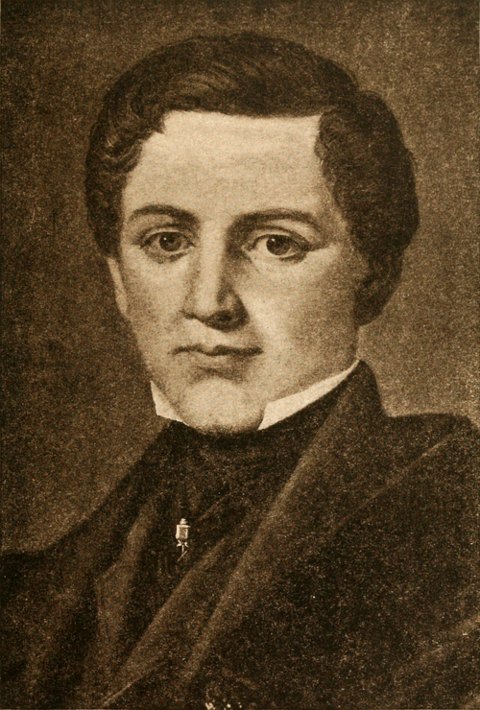
Η Βικιπαίδεια δεν έχει ακόμη άρθρο για αυτόν τον συγγραφέα σε αυτή τη γλώσσα. Παρακάτω, το κείμενο στα αγγλικά.
Wilhelm Hauff (29 November 1802 – 18 November 1827) was a German poet and novelist known for his stories and novels. Raised in Stuttgart and educated in Tübingen, he wrote fairy tales such as Der kleine Muck (Little Muck) and Das kalte Herz (Heart of Stone), the historical romance Lichtenstein, and the parody Der Mann im Mond (The Man in the Moon). He died of typhoid fever at age 24. Blending exotic and fantastic motifs with German settings, his tales remain popular in German-speaking countries.
Early life
Hauff was born in Stuttgart, the son of August Friedrich Hauff, a secretary in the Württemberg ministry of foreign affairs, and Hedwig Wilhelmine Elsaesser Hauff. He was the second of four children.
Hauff lost his father when he was seven years old, and his early education was practically self-gained in the library of his maternal grandfather at Tübingen, where his mother had moved after the death of her husband. In 1818 he was sent to the Klosterschule at Blaubeuren, and in 1820 began to study at the University of Tübingen. In four years he completed his philosophical and theological studies at the Tübinger Stift, graduating with a PhD.
Writings
On leaving the university, Hauff became tutor to the children of the Württemberg minister of war, General Baron Ernst Eugen von Hugel (1774–1849), and for them wrote his Märchen (fairy tales), which he published in his Märchen Almanach auf das Jahr 1826 (Fairytale Almanac of 1826 published as Tales of the Caravan, Inn, and Palace. in the US). Some of these stories are very popular in German-speaking countries to this day, such as Der kleine Muck (Little Muck), Kalif Storch (Caliph Stork) and Die Geschichte von dem Gespensterschiff (The Tale of the Ghost Ship)—all set in the Orient—as well as Der Zwerg Nase (Little Longnose), Das kalte Herz (Heart of Stone) and Das Wirtshaus im Spessart (The Spessart Inn), set in Germany.