Auteur
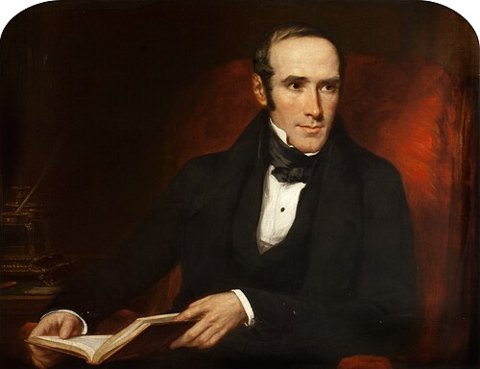
Andrew Combe
1797–1847
- Naissance
- 27 octobre 1797, Édimbourg
- Décès
- 9 août 1847, Gorgie
- Nationalité
- Royaume-Uni de Grande-Bretagne et d'Irlande et royaume de Grande-Bretagne
- Profession
- Médecin, physiologiste et anatomiste
Vie et œuvre
Wikipédia n'a pas encore d'article sur cet auteur dans cette langue. Ci-dessous, le texte en anglais.
Andrew Combe (27 October 1797 – 9 August 1847) was a Scottish physician and phrenologist.
Life
Combe was born in Edinburgh on 27 October 1797, the son of Marion (née Newton) and George Combe (1745–1816), a brewer, and was a younger brother of George Combe. After some years at the Royal High School, he became a surgeon's pupil in 1812, residing during most of the time with his elder brother George Combe, and obtaining his diploma at Surgeons' Hall on 2 February 1817.
In October 1817, he went to Paris to complete his medical studies, specialising in anatomy and investigating cerebral morphology under Spurzheim's supervision in 1818–19. After a visit to Switzerland, he returned to Edinburgh in 1819, intending to start a practice there. However, illness compelled him to spend the next two winters in the south of France and Italy. In 1823, he began to practise in Edinburgh. He had already made contributions to the newly established Edinburgh Phrenological Society. The first to be published was On the Effects of Injuries of the Brain upon the Manifestations of the Mind, read on 9 January 1823. In the same year he also answered Dr Barclay's attack on phrenology in his Life and Organisation. Combe's essay was so clearly written that a subsequent opponent of phrenology alluded to its "satanic logic".
In 1823, Combe joined his brother and others in establishing the Phrenological Journal, following a debate at the Royal Medical Society in which he felt he had scored a major victory over the opponents of phrenology, but of which the Society declined to publish any account. This memorable discussion, inspired by one of Andrew Combe's essays, took place at the Royal Medical Society on 21 and 25 November 1823, and lasted till nearly four in the morning. The essay was published in the Phrenological Journal (vol 1, p. 337); but records of the discussion were suppressed by means of an injunction obtained by the Medical Society from the Court of Session. In 1825, Combe graduated with an MD at Edinburgh. His practice grew quickly because of Combe's personal qualities – his ability to listen, and his exceptional professional courtesy. In 1827, he was elected President of the Edinburgh Phrenological Society.
Texte: “Andrew Combe”, de Wikipédia, l'encyclopédie libre, sous licence CC BY-SA 4.0. Dates et faits : Wikidata.
Collection
Livres de Andrew Combe
1 livre