Wikipédia n'a pas encore d'article sur cet auteur dans cette langue. Ci-dessous, le texte en anglais.
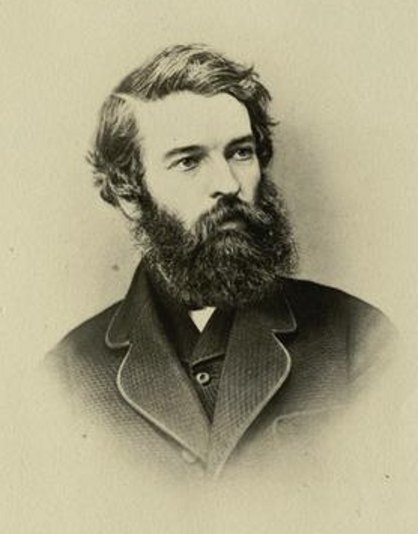
Christopher Pearse Cranch (March 8, 1813 – January 20, 1892) was an American writer and artist often associated with Transcendentalism and the Hudson River School.
Biography
Cranch was born March 8, 1813, in Alexandria, Virginia. His conservative father, William Cranch, was Chief Judge of the United States Circuit Court of the District of Columbia. Cranch was the youngest of 13 siblings, including his brother John who would go on to become a painter.
He graduated from Columbian College (now George Washington University) in 1835 before attending Harvard Divinity School and becoming a licensed preacher. During his years at Harvard, he came in contact with people like John Sullivan Dwight and Theodore Parker, through whom he was introduced to Unitarianism. He traveled as a Unitarian minister, preaching in Providence, Andover, Richmond, Bangor, Portland, Boston, Washington, and St. Louis. Later, he pursued various occupations: a magazine editor, caricaturist, children's fantasy writer (the Huggermugger books), poet (The Bird and the Bell with Other Poems in 1875), translator, and landscape painter. He married Elizabeth DeWindt in 1843. His daughter, Caroline Cranch, was a painter.
Though not one of its founding members, Cranch became associated with the Transcendental Club; he read Ralph Waldo Emerson's Nature by December 1836 and beginning in June 1837 served as a substitute editor of the Western Messenger in the absence of James Freeman Clarke. For that journal, Cranch reviewed Emerson's Phi Beta Kappa address at Harvard in August 1837 known as "The American Scholar". He referred to the speech as "so full of beauties, full of original thought and illustration" and its author as "the man of genius, the bold deep thinker, and the concise original writer".