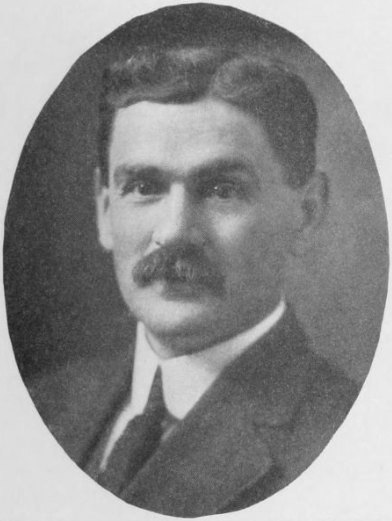
Wikipédia n'a pas encore d'article sur cet auteur dans cette langue. Ci-dessous, le texte en anglais.
Clark David Wissler (September 18, 1870 – August 25, 1947) was an American anthropologist, ethnologist, and archaeologist.
Early life
Clark David Wissler was born in Cambridge City, Indiana on September 18, 1870, to Sylvania (née Needler) and Benjamin Franklin Wissler. After graduating from Hagerstown High School, he taught in local schools between 1887 and 1892, and studied at Purdue University after the six-month school term ended. The following year in 1893 he was the principal of Hagerstown High School, and then he resigned his post and enrolled in Indiana University.
Education
Wissler received a Bachelor of Arts in Experimental Psychology from Indiana University in 1897 and a Master of Arts in 1899. He continued his psychology graduate work under James McKeen Cattell at Columbia University. He received his Doctor of Philosophy in psychology from Columbia in 1901. From 1901 to 1903 Wissler performed research on individual mental and physical differences. Wissler's doctoral dissertation used the new Pearson correlation coefficient formula to show that there was no correlation between scores on Cattell's IQ tests and academic achievement. Wissler's dissertation eventually led the psychology movement to lose interest in psychophysical testing of intelligence.
In 1929, he received a LLD from Indiana University.
Early career
In 1897, he served as an instructor at Indiana University. From 1897 to 1899, he was an instructor at Ohio State University. In 1899 Wissler was appointed assistant in psychology at Columbia University. At Columbia, Wissler also served as an assistant professor of anthropology from 1903 to 1905 and as a lecturer from 1905 to 1909. Wissler was also an instructor at New York University from 1901 to 1902.