Wikipédia n'a pas encore d'article sur cet auteur dans cette langue. Ci-dessous, le texte en anglais.
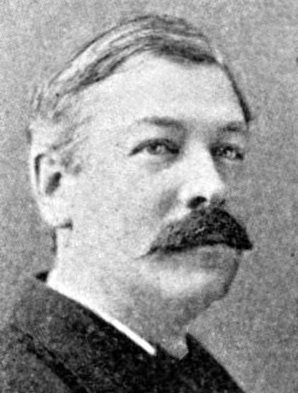
Henry Abbey (July 11, 1842 – June 7, 1911) was an American poet who is best remembered for the poem, "What do we plant when we plant a tree?" He is also known for "The Bedouin's Rebuke".
Biography
Abbey was born in Rondout (now a part of Kingston), New York, the son of Stephen Abbey, a merchant of farm products, and Caroline Vail. His family was moderately successful and able to support his attendance at Kingston Academy, the Delaware Literary Institute in Delhi, New York, and the Hudson River Institute across the river in Columbia County, but the uncertain grain and feed business was insufficient to enable him to attend college.
He was secured work as assistant editor of the Rondout Courier in 1862 and of the Orange, N.J., Spectator in 1863; while contributing verses to many periodicals. In 1864-65 he was teller in a bank and in 1866 became a flour and grain merchant.
In 1862 he financed the publication of a slim volume of his verse, May Dreams, dedicated to William Cullen Bryant, who generously allowed himself to be quoted in it as recognizing in the author "the marks of an affluent fancy". Abbey's verse was relatively simple in prosody, language, and topic, much of it celebrating nature and the beauties of his region.
Abbey's next collection, Ralph, and Other Poems (1866), also appeared at the author's expense. By then his work was appearing regularly in such national magazines as Appleton's, the Overland Monthly, and Chambers', and Abbey had become a member of literary circles locally and in New York City, some hundred miles south of Rondout. A part of the "Pfaff Group"—literary people, including Walt Whitman, Thomas Nast, and Artemus Ward (Charles Farrar Browne), who frequented the cellar of Pfaff's Café at 653 Broadway in New York City. Abbey was a friend of the naturalist John Burroughs and was active in arranging speaking engagements in Rondout for such celebrities as Mark Twain.