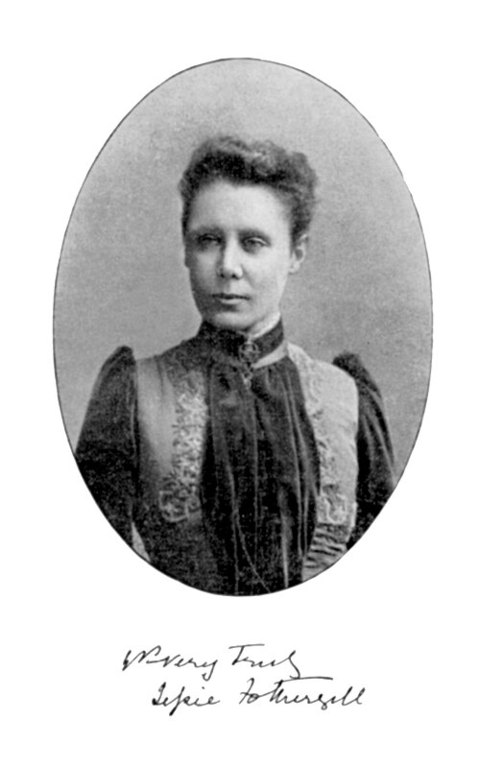
Wikipédia n'a pas encore d'article sur cet auteur dans cette langue. Ci-dessous, le texte en anglais.
Jessie Fothergill (June 1851 – 28 July 1891) was an English novelist. Her novel The First Violin sold particularly well. Publishers initially rejected it because of themes of female adultery which they felt would reduce sales; the opposite effect occurred instead.
Life and writings
Fothergill was born in June 1851 at Cheetham Hill, Manchester, the eldest child of Thomas Fothergill, a businessman in the cotton trade, and his wife Anne. He had once been a Quaker. Anne was the daughter of William and Judith Coultate of Burnley. (Jess Fothergill's sister Catherine also wrote novels, which appeared between 1883 and 1898.) The Fothergills when she was young moved to Bowdon in Cheshire, where she attended a private school, followed by a boarding school in Harrogate. Her father died in 1866, and shortly after, Jessie Fothergill, with her mother, sisters, and brothers moved to Littleborough, near Rochdale, where Jessie lived quietly, studying the life led by the cotton-mill workers: "strange uncouth people, the out-of-the-worldness of it all."
Jessie, Caroline and two friends spent 15 months in Düsseldorf, Germany, in 1874. On her return to England she published her first novel, Healey, in 1875, having already started her third novel, The First Violin (1876), which made Fothergill's name, although it was originally published anonymously to protect her family. Inspired by her 15 months studying music in Düsseldorf, it tells the story of a 17-year-old English girl who rejects the attentions of a rich landowner, to become instead a lady's companion and travel to "Elberthal" (i. e. Düsseldorf), where she can take voice lessons. The story follows her adventures and goes into detail on the artists and their lives and how music was rehearsed and performed by amateurs as well as professionals, using the German terms where appropriate.