Wikipédia n'a pas encore d'article sur cet auteur dans cette langue. Ci-dessous, le texte en anglais.
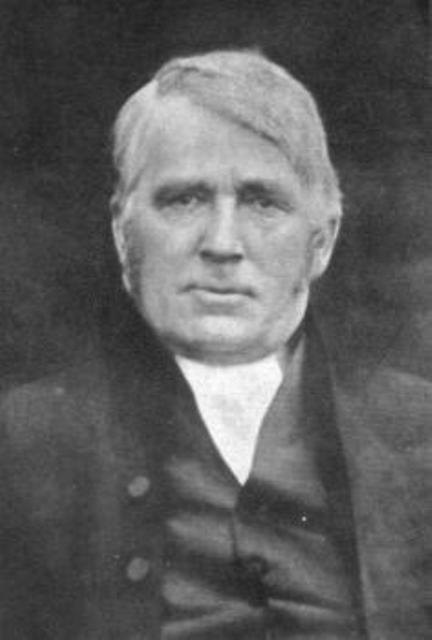
Joseph Sturge (2 August 1793 – 14 May 1859) was an English Quaker, abolitionist and activist. He founded the British and Foreign Anti-Slavery Society (now Anti-Slavery International). He worked throughout his life in Radical political actions supporting pacifism, working-class rights, and the universal emancipation of slaves. In the late 1830s, he published two books about the apprenticeship system in Jamaica, which helped persuade the British Parliament to adopt an earlier full emancipation date. In Jamaica, Sturge also helped found Free Villages with the Baptists, to provide living quarters for freed slaves; one was named Sturge Town in his memory.
Early life
Born on 2 August 1793, Joseph Sturge was the fourth child in the family of 12 of Joseph Sturge, a farmer in Elberton, Gloucestershire, and his wife Mary Marshall, who belonged to the Religious Society of Friends (commonly known as Quakers). His brothers included John Sturge, who became a manufacturer in Birmingham, and Edmund Sturge. The abolitionist and pacifist Sophia Sturge (1795–1845) was his sister, and Charles Gilpin was a nephew.
After a year at school in Thornbury, Sturge boarded for three years at the Quaker Sidcot School. He then farmed with his father, and on his own account. Of pacifist views, he refused in 1813 to serve in the militia.
Failing at first to earn a living as a corn factor, at Bewdley from 1814, Sturge moved to Birmingham in 1822. There he became an importer of grain. Successful in business, with his brother Charles, he built up the company. The Sturges as a family became investors in railways and docks. Joseph from 1831 ceased to be an active partner, leaving operations to Charles, and concentrated on causes and public life. As an abolitionist, he was allied in 1831 with George Stephen in pressing Parliament for immediate legislation against slavery. The Reform Act 1832, in his view, failed to address poverty, and he worked for radical electoral reform.