Wikipédia n'a pas encore d'article sur cet auteur dans cette langue. Ci-dessous, le texte en anglais.
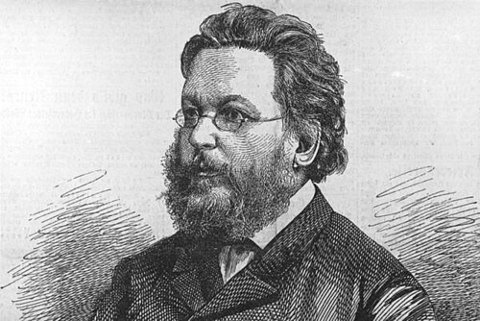
Ludwig Speidel (11 April 1830 – 3 February 1906) was a German writer, which in the second half of the 19th century was the leading music, theater and literary critic in Vienna.
Life
Born in Ulm, Speidel received first musical lessons from his father, singer and composer Konrad Speidel (born 16 September 1804 in Söflingen bei Ulm; died 6 January 1880 in Ulm; married to Anna Steiner) and attended the Gymnasium in Ulm. From 1850 until 1853, he studied different subjects only as a guest student at the Ludwig-Maximilians-Universität München due to lack of financial means. Besides, he gave piano lessons and from 1852 he wrote reviews for the Augsburger Allgemeine; his first ('Musikalisches aus München') was published on October 28. Among his circle of acquaintances in Munich were Friedrich Kaulbach, Ernst Förster, Jakob Philipp Fallmerayer, Justus von Liebig, Ludwig Steub and Adolf Bayersdorfer.
In 1853, Speidel came to Vienna, allegedly to report on the marriage of Empress Elisabeth of Austria to Franz Joseph I. He became friends with Carl Rahl and remained in Vienna, where he subsequently worked for numerous newspapers and magazines, including Pester Lloyd (1854), the Danube (1855-1863), the Österreichische Zeitung (1855-1858), the Jagdzeitung and the Morgenpost (1858), the Neuste Nachrichten (1859) and the Wiener Zeitung (1858/59). He wrote about many topics: Theatre, music, art, chats, humoresques, travel letters, genre pictures among others 1860-1864 he worked for the newspaper Vaterlan. With the foundation of Neuen Freie Presse in 1864, Speidel became its first feature editor for four decades. Around the same time, he was also the music critic of the Fremden-Blatt. While he wrote for the Presse rather in a chosen language, he used a very popular way of expression in the Fremden-Blatt, which could remind one of joke magazines.