Debris
Lecture en ligne Voir le livre
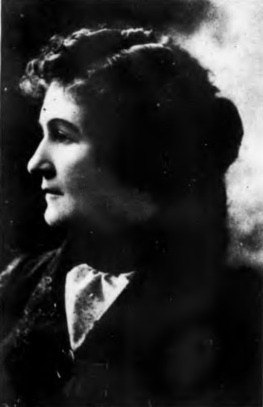
Auteur
1862–1924
Wikipédia n'a pas encore d'article sur cet auteur dans cette langue. Ci-dessous, le texte en anglais.
Madge Morris Wagner (née Morris; 1862–1924) was an American poet and journalist associated with The Golden Era. She was a contemporary and friend of Clara Shortridge Foltz and Frona Eunice Wait. Some of Wagner's poems were known around the world.
Madge Morris was born April 25, 1862, in Oregon, on the plains when her parents were en route to California. She was a descendant of Capt. Morris, who built Fort Morris, in Virginia.
She was educated in the common schools.
Early on, Wagner became a journalist and poet. Her early work in verse was begun in San Jose, California, where she lived in the 1880s. There she served as reporter and special writer on J. J. Owen's Daily Mercury, with many of her stanzas appearing there, too. Her notability dates to an order given her, half in jest, by Owen to go to the top of the 180 feet (55 m) electric tower at Market and Santa Clara streets, and write a poem on the panorama of Santa Clara Valley to be seen from that dangerous height. Madge took the order seriously. In those days, there was a big bucket run with a windlass which took the electrician up to inspect the lanterns on top. Climbing into this bucket, she was hauled up the tower. Here, unfazed by the dizzy height, she wrote:
Her patriotic poem "Liberty Bell" led to the construction of the Columbian Liberty Bell. With this, Wagner reached the acme of her notability when, in 1893, because of her poem, she and William Osborne McDowell, who conceived a great bell for the World's Columbian Exposition, were voted by the Chicago authorities the freedom of the city. Wagner's husband received a letter from McDowell, stating that his wife was appointed honorary member of the committee to create and direct the use of the Columbian Liberty Bell to be rung at the World's Fair. The bell was to be made up of slaves' chains from all parts of the world and contributions of silver, gold and copper money. It was to be cast at Troy, New York. The idea, expressed in one of Wagner's poems, was adopted as the fundamental motive in the casting of the bell, hence her appointment to an honorary position on the committee having the work in charge. One of the most notable receptions at the Exposition was that tendered by the women of the California Building, July 6, 1893, to Wagner, of San Diego, the object being to give special recognition to the fact that it was a California woman whose poem prompted the making of the new Liberty Bell.
Texte: “Madge Morris Wagner”, de Wikipédia, l'encyclopédie libre, sous licence CC BY-SA 4.0. Dates et faits : Wikidata.
Collection
1 livre