Wikipédia n'a pas encore d'article sur cet auteur dans cette langue. Ci-dessous, le texte en anglais.
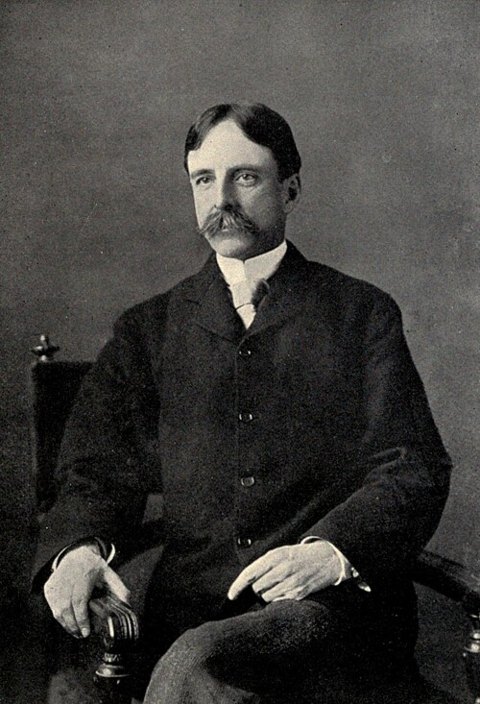
Robert Grant (January 24, 1852 – May 19, 1940) was an American writer and a jurist who participated in a review of the Sacco and Vanzetti trial a few weeks before their executions.
Biography
Grant was born to Patrick Grant (1810–1895) and Charlotte Boardman (Rice) Grant (1821–1882) in Boston, Massachusetts, on January 24, 1852, and was a descendant of Edmund Rice, an early immigrant to Massachusetts Bay Colony. He attended Boston Latin School and graduated from Harvard University in 1873. At one point in his college career, he was publicly reprimanded for missing chapel on 22 occasions. He received the first Ph.D. in English granted by Harvard in 1876 and a law degree in 1879.
His first novel, published in 1880, was The Confessions of a Frivolous Girl, a realistic depiction of problems facing young women. He published his second novel An Average Man in 1883, a study of two young New York lawyers with very different ambitions. His next novel, published in 1886, was Face to Face, which contrasted English and American manners and social norms. In 1886, Ticknor and Fields published his 198-page novel, The Knave of Hearts, which was billed as a "fairy" story but was actually more of a Victorian romance. He followed that with the novel that proved to be his most successful, Unleavened Bread (1900), the story of a woman who abandons her moral standards in a search for prestige and dominance was one of the best selling novels of 1900.
His output continued with The Undercurrent (1904); The Orchid (1905), an examination of the impact of divorce in the upper class; The Chippendales (1909), the story of the decline in character of a Boston family over the course of several generations; The High Priestess (1915), detailing a woman's struggle to have a career; and The Bishop's Granddaughter (1925), a humorous view and critique of American divorce law.