Autore
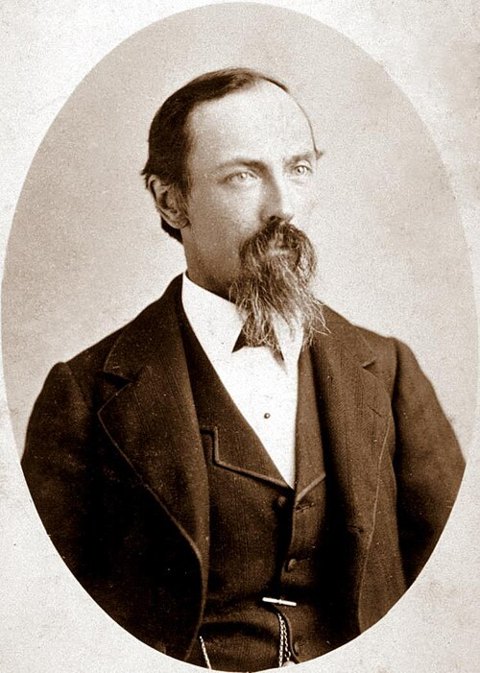
Eugene W. Hilgard
1833–1916
- Nascita
- 5 gennaio 1833, Zweibrücken
- Morte
- 8 gennaio 1916, Berkeley
- Nazionalità
- Stati Uniti
- Professione
- Chimico, professore universitario, geologo, erborizzatore e collezionista scientifico
Vita e opere
Wikipedia non ha ancora una voce su questo autore in questa lingua. Di seguito, il testo in inglese.
Eugene Woldemar Hilgard (January 5, 1833 – January 8, 1916) was a German-American expert on pedology (the study of soil resources). An authority on climate as a soil forming factor, soil chemistry and reclamation of alkali soils, he is considered as the father of modern soil science in the United States.
Early life
Hilgard was born at Zweibrücken, Kingdom of Bavaria, January 5, 1833, the son of Theodore Erasmus and Margaretha (Pauli) Hilgard. His father was a successful lawyer, holding the position of chief justice of the court of appeals of the province of Rhenish Bavaria. His liberally-minded father was displeased by the increasingly reactionary government of Ludwig I, and having secured a letter of recommendation from Lafayette, he resolved to move his family to America. After a 14-day overland trip to Le Havre, followed by a 62-day ocean voyage aboard the ship Marengo, the family arrived in New Orleans, Louisiana, on Christmas Day 1835, then traveled up the Mississippi River to St. Louis, Missouri, finally settling on a farm in Belleville, Illinois. His father had chosen that particular area based on the writings of Gottfried Duden, who had described the area as a sort of El Dorado for German immigrants.
The youngest of nine children, Eugene received his early education under the tutelage of his father. During an epidemic of malaria that killed his eldest sister, Eugene was stricken as well, and the resultant fevers and impaired eyesight plagued him for the next several years of his young adulthood. His mother died in 1842, leaving Eugene's care in the hands of his remaining sisters. He educated himself in the fields of botany, chemistry, and physics, but his continued precarious health led doctors to suggest a change in climate, so in 1848 he traveled to Washington, D.C., with his eldest brother Julius, who was returning to his job at the United States Coast Survey.
Testo: “Eugene W. Hilgard”, da Wikipedia, l'enciclopedia libera, con licenza CC BY-SA 4.0. Date e fatti: Wikidata.
Collezione
Libri di Eugene W. Hilgard
1 libro