Wikipedia non ha ancora una voce su questo autore in questa lingua. Di seguito, il testo in inglese.
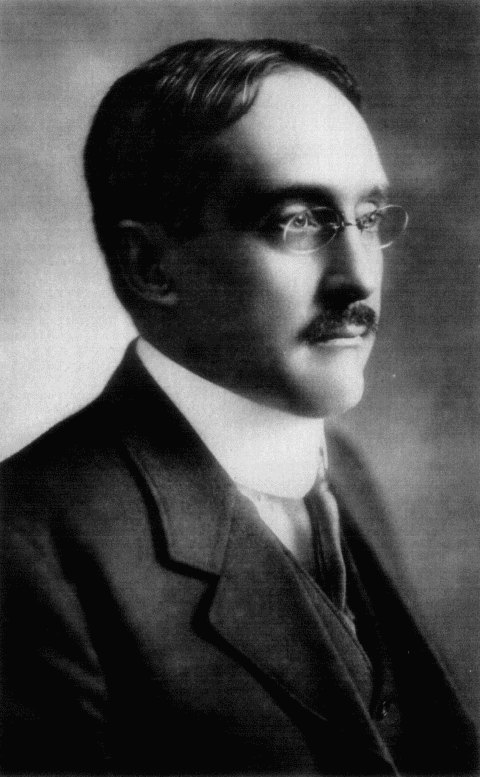
James Watson Gerard III (August 25, 1867 – September 6, 1951) was an American lawyer, diplomat, and justice of the New York Supreme Court.
Early life and education
Gerard was born in Geneseo, New York. His father, James Watson Gerard Jr., was a lawyer and Democratic Party politician in New York. and his grandfather, also James Watson Gerard, was a noted trial lawyer and civic reformer in New York. He graduated from Columbia University (A.B. 1890; A.M. 1891), where he was a member of the Philolexian Society,
and from New York Law School (LL.B. 1892).
Career
Gerard was chairman of the Democratic campaign committee of New York County for four years. He served in the National Guard of the State of New York for four years. He served through the Spanish–American War (1898) on the staff of General McCoskry Butt. From 1900 to 1904, he was quartermaster, with the rank of major, of the 1st Brigade of the Guard. He was elected to the New York Supreme Court in 1907, where he served as a judge until 1911.
U.S. Ambassador to Germany
Under President Woodrow Wilson, Gerard served as the American Ambassador to Germany from 1913 to 1917.
In 1914, Gerard was the Democratic (Tammany Hall) candidate for U.S. Senator from New York. He defeated the Anti-Tammany candidate, Franklin D. Roosevelt, in the Democratic primary, but lost the election to James W. Wadsworth, Jr.
At the outbreak of World War I, in 1914, Gerard assumed the care of British interests in Germany, later visited the camps in which British prisoners were confined, and did much to alleviate their condition. His responsibilities were further increased by the fact that German interests in France, Britain, and Russia were placed in the care of the American embassies in those countries, which made the American embassy in Berlin become a sort of clearing house. From first-hand knowledge, he settled the question, much disputed among the Germans themselves, as to the official attitude of the German government toward the violation of Belgian neutrality.