Wikipedia non ha ancora una voce su questo autore in questa lingua. Di seguito, il testo in inglese.
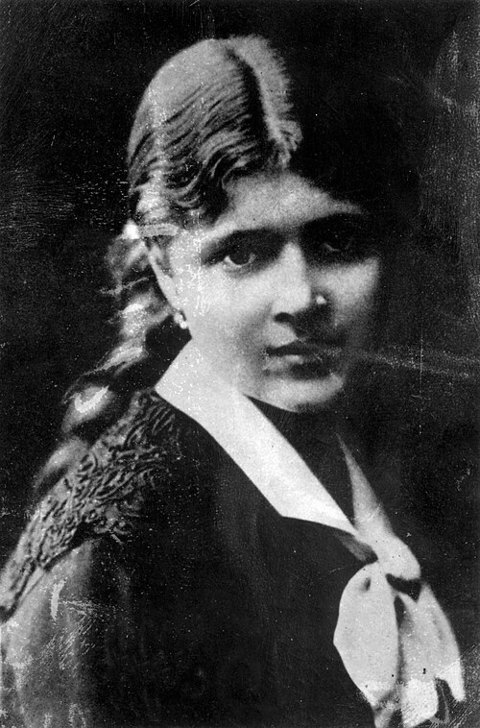
Cornelia Hubertina "Neel" Doff (27 January 1858 – 14 July 1942) was a writer of Dutch descent living and working in Belgium and mainly writing in French. She is one of the most important contributors to proletarian literature.
Biography
Born in Buggenum, Netherlands, into a family of nine, Cornelia accompanied her family on its perennial successive moves (Amsterdam, Antwerp, Brussels) facing a progressively worsening poverty. Determined to fight her way from underneath the rag and tether class she started modeling for a large number of renowned Belgian painters (James Ensor, Félicien Rops) and to a lesser extent sculptors (Charles Samuel, Paul de Vigne). She posed as Charles de Coster's character Nele by Charles Samuel (Monument Charles de Coster, Charles de Coster Monument Place Flagey Ixelles) and for Paul de Vigne, The Little Dutch Girl (Royal Museums of Fine Arts of Belgium), and highly probably for the identical Metdepenningen (Ghent cemetery and Ben Cable Monuments Ben Cable Monument Chippiannock Cemetery, Rock Island in Illinois).
In these artistic circles she met Fernand Brouez (1860–1900) whom she eventually married. Son of Jules Brouez, a rich notary and Victorine Sapin, Fernand Brouez financed and edited La Société Nouvelle, at that time considered the most valuable socialist economical magazine in the French language.
After Brouez's death she married Georges Serigiers, a prominent lawyer from Antwerp and family friend of the Brouez family. Years later, when looking at a cluster of youngsters through the window of the Serigiers stately home in Antwerp, the hurtful memories of her past came to life. She poured her heart and soul in her first book Jours de Famine et de Détresse (Days of Hunger and Distress). In picture like stories she tells the tale of a young girl, Keetje Oldema exposed to scorn and humiliation because of her hopeless misery, eventually forced into prostitution by her mother to feed her little brothers and sisters. Laurent Tailhade became her greatest fan and, fascinated by this journey of annihilated youth, defended her work at the 1911 Prix Goncourt. She lost the prize by one vote, but remained nevertheless very impressed with the honour of being nominated.