Wikipedia non ha ancora una voce su questo autore in questa lingua. Di seguito, il testo in inglese.
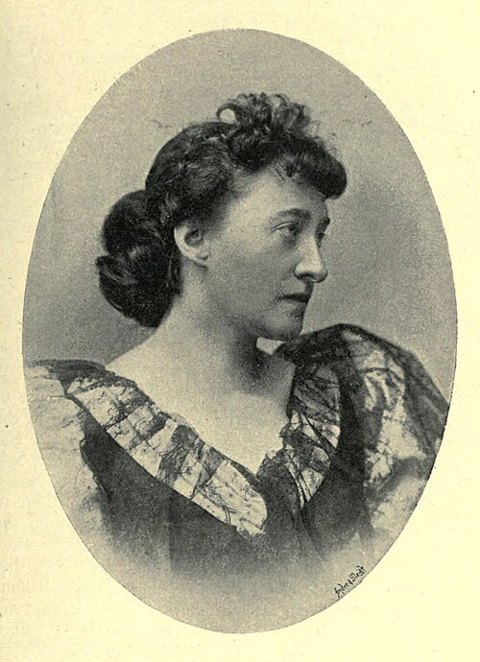
Sarah Grand (10 June 1854 – 12 May 1943) was an Irish-English feminist writer active from 1873 to 1922. Her work revolved around the New Woman ideal.
Early life and influences
Sarah Grand was born Frances Elizabeth Bellenden Clarke in Rosebank House, Donaghadee, County Down, Ireland, of English parents. Her father was Edward John Bellenden Clarke (1813–1862) and her mother was Margaret Bell Sherwood (1813–1874). When her father died, her mother took her five children to Yorkshire, England. They lived in Bridlington, to be near the Bell Sherwood family who lived at Rysome Garth near Holmpton in the East Riding of Yorkshire.
Grand's education was very sporadic, yet she managed with perseverance to make a career for herself as an activist and writer, drawing on her travels and life experiences.
In 1868 Grand was sent to the Royal Naval School, Twickenham, but was soon expelled for organizing groups that supported Josephine Butler's protests against the Contagious Diseases Act, which persecuted prostitutes as infected women, as the sole cause of the spread of sexually transmitted diseases, subjecting them to indignities such as inspection of their genitals and enclosure in locked hospital wards.
Grand was then sent to a finishing school in Kensington, London.
In August 1870, at the age of sixteen, she married widowed Army surgeon David Chambers McFall. He was 23 years her senior and had two sons from his previous marriage: Chambers Haldane Cooke McFall and Albert William Crawford McFall. Grand and McFall's only child, David Archibald Edward McFall, was born in Sandgate, Kent, on 7 October 1871. He became an actor and took the name Archie Carlaw Grand.