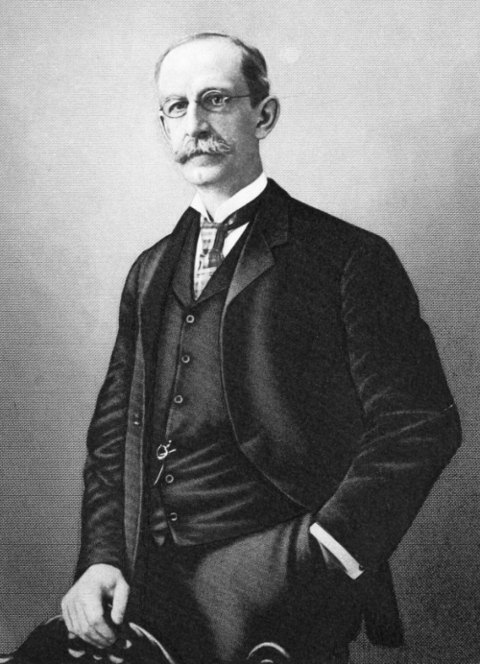
作者
Archibald Murray Howe
1848–1916
- 出生
- 1848年5月20日, 北安普敦
- 逝世
- 1916年1月6日, 剑桥
- 国籍
- 美国
- 职业
- 律师, 历史学家 和 政治人物
生平与作品
维基百科暂无该作者的中文条目。 以下为英语原文。
Archibald Murray Howe (May 20, 1848 – January 6, 1916) was an American lawyer and historian. In 1900, he was named as the Vice-Presidential candidate of the short-lived "National Party".
Life and career
Born in Northampton, Massachusetts, on May 20, 1848, Howe was of pilgrim ancestry. He grew up in the Boston suburb of Brookline, where he attended a local academy. He graduated from Harvard University in 1869, and, three years later, graduated from the Harvard University School of Law. He served as the private secretary to Republican Henry Lillie Pierce (1825–1896) when the latter was elected to the US House of Representatives in 1872, remaining so until 1877, when Pierce left Congress. Later, Howe served as a member of the School Committee and the Common Council in Cambridge, where he had moved after returning to Massachusetts.
A Republican in politics, who had broken from the party in 1884 to support Democrat Grover Cleveland, Howe argued against the foreign policies of Republican President William McKinley, which Howe and others saw as imperialist. To this end, in 1900 a group of like-minded people met at Carnegie Hall in New York City on September 5, 1900 and formed the National Party as a protest against McKinley. They nominated Donelson Caffery of Louisiana, a US Senator and Democrat, for President and Howe for Vice President. Caffery had not asked to be nominated by a party other than his own, and he quickly withdrew; Howe followed, and the party merely asked its followers nationwide to vote for the party's electors as a protest vote. Few votes were received.
文字: “Archibald M. Howe”, 来自自由的百科全书维基百科,许可协议为 CC BY-SA 4.0. 日期与资料:维基数据。
馆藏
Archibald Murray Howe的图书
1 图书