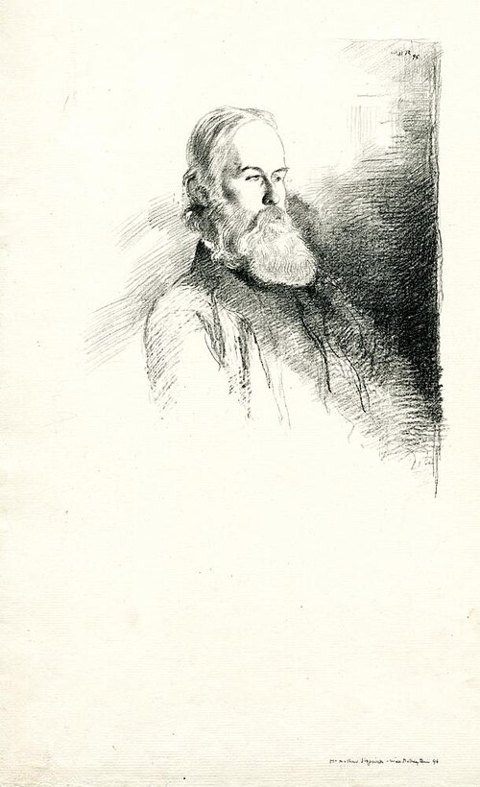
Arthur Sidgwick (1840–1920) was an English classical scholar who had an early career as a schoolteacher. Despite his self-deprecating remark "in erudition I am naught", he is considered a great teacher of ancient Greek poetry.
He also became an important figure in the advancement of female education at the University of Oxford.
Early life
The fourth son and fifth child of the Rev. William Sidgwick (died 1841) and his wife Mary Crofts, he was born at Skipton, Yorkshire; Henry Sidgwick was his older brother. He was educated at Rugby School and Trinity College, Cambridge, matriculating in 1859, and graduating B.A. as second classic in 1863. He was President of the Cambridge Union in 1863. As was Henry, he was elected to the Cambridge Apostles. They tried, but failed, to have F. W. H. Myers elected also.
Career
A Fellow of Trinity College from 1864 to 1879, Sidgwick was for that period an assistant master to Rugby School, invited to return by Frederick Temple, headmaster at the end of his time as a pupil there. He clashed with Henry Hayman, the headmaster of Rugby. With Henry Lee Warner (1842–1925) as an ally, Sidgwick organised a significant resistance to the incoming Hayman's authority. There followed a furore in 1873–4. It saw Hayman ousted after trying to sack Sidgwick and Charles James Eliseo Smith (1835–1900).
In 1879, Sidgwick became a Fellow of Corpus Christi College, Oxford. He stood out among the generally orthodox, conservative classics dons as a Liberal, as did the radical Thomas Collins Snow. He pioneered, with Arthur Herbert Dyke Acland, undergraduate study groups to raise awareness of current affairs.