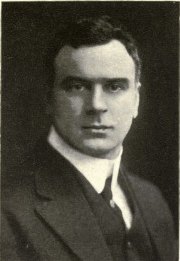
Arthur John Stringer (February 26, 1874 – September 13, 1950) was a Canadian novelist, screenwriter, and poet who later moved to the United States.
He published 45 works of fiction and 15 other books, in addition to writing filmscripts and articles.
Early life
Stringer was born in Chatham, Ontario. In 1884 the family moved to London, Ontario, where Charles attended London Collegiate Institute. At the Institute he founded and edited a school magazine called Chips. He then attended University College, University of Toronto from 1892 to 1894 and later studied at Oxford University.
Career
Stringer's first book of poetry, Watchers of Twilight and Other Poems, was published in 1894.
In 1895 he worked for the Montreal Herald. At this time he was also publishing in Saturday Night and the Canadian Magazine. In 1898 he got a job with the American Press Association, moved to New York City, and began publishing in The Atlantic and Harper's. His first poem in Harper's, "Remorse", appeared in February 1899. His first novel, The Silver Poppy, came out in 1903. In the same year he bought a farm on the shore of Lake Erie and married actress Jobyna Howland, known as the original Gibson Girl.
They divorced in 1914, and Stringer married his cousin, Margaret Arbuthnott.
In 1921, the Stringers moved to Mountain Lakes, New Jersey, where Arthur Stringer continued to write.
Stringer wrote crime fiction and wilderness adventures, mainly using conventional formulae. He wrote as well in many other genres, from social realism (his "Prairie" trilogy, 1915–1921) to psychological fiction (The Wine of Life (1921). He wrote early science fiction novels, The Story Without a Name (1924) with Russell Holman, and The Woman Who Couldn't Die (1929).