作者
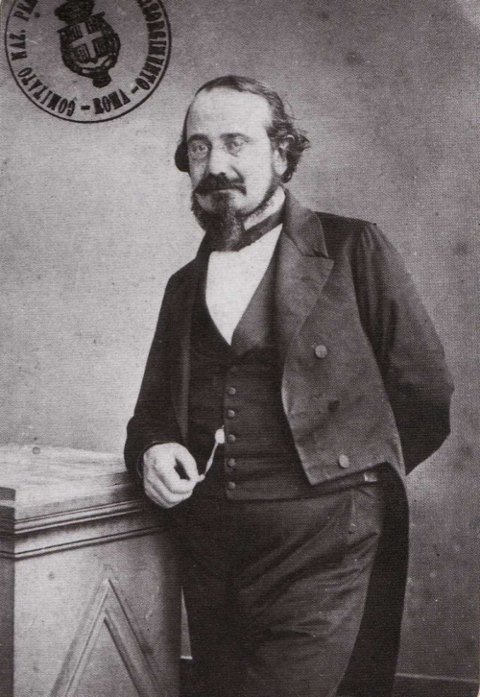
Bertrando Spaventa
1817–1883
- 出生
- 1817年6月26日, 邦巴
- 逝世
- 1883年2月21日, 那不勒斯
- 国籍
- 意大利王国
- 职业
- 哲学家, 政治人物, 新闻工作者 和 教授
生平与作品
维基百科暂无该作者的中文条目。 以下为英语原文。
Bertrando Spaventa (26 June 1817 – 20 September 1883) was a leading Italian philosopher of the 19th century whose ideas had an important influence on the changes that took place during the unification of Italy and on philosophical thought in the 20th century.
Biography
Elder brother of Italian patriot Silvio Spaventa, Bertrando was born into a middle-class family in financial difficulty. His mother, Maria Anna Croce, was the great-aunt of philosopher Benedetto Croce.
He was educated at the Diocesan Seminary in Chieti and ordained there. In 1838 he moved, along with his brother, to Montecassino to take up the post of teacher of mathematics and rhetoric at the local seminary. In 1840 he went to Naples to continue his education. By learning German and English, he became one of the first Italian thinkers of the period to read the works of foreign philosophers in the original. He moved in liberal circles and became close to thinkers like Ottavio Colecchi (Italian entry) and Antonio Tari (Italian entry), set up his own philosophy school and also helped edit Il Nazionale, the newspaper founded and edited by his brother, Silvio. In 1849, following the repeal of the Constitution by Ferdinando II and the arrest of Silvio, he left Naples: first for Florence, then Turin. After abandoning the priesthood, he began work as a journalist for the Piedmontese publications Il Progresso, Il Cimento, Il Piemonte, and Rivista Contemporanea. While in Turin, Spaventa drew close to the ideas of Hegel, working out his philosophical system and political thought, and engaging in a polemic with La Civiltà Cattolica, the Jesuit's journal, arguing against the idea that religion was necessary for human development.
文字: “Bertrando Spaventa”, 来自自由的百科全书维基百科,许可协议为 CC BY-SA 4.0. 日期与资料:维基数据。
馆藏
Bertrando Spaventa的图书
1 图书