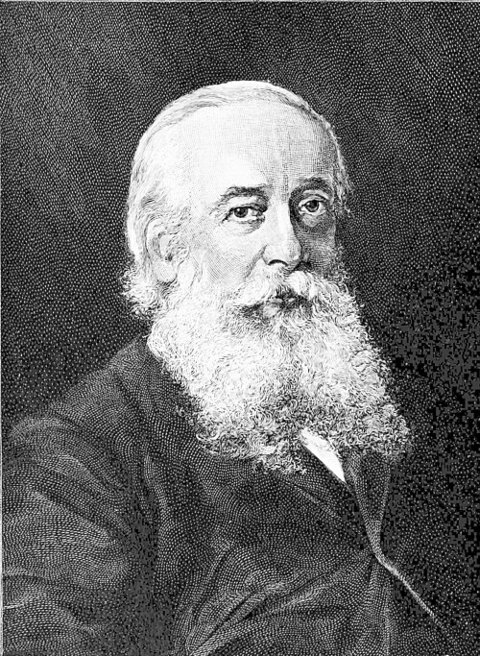
作者
C. Semper
1832–1893
- 出生
- 1832年7月6日, 阿尔托那
- 逝世
- 1893年5月30日, 维尔茨堡
- 国籍
- 普鲁士王国
- 职业
- 动物学家, 自然科学家, 软体动物学家, 大学教师 和 昆虫学家
生平与作品
维基百科暂无该作者的中文条目。 以下为英语原文。
Carl Gottfried Semper (July 6, 1832, Altona, Duchy of Holstein – May 29, 1893, Würzburg) was a German ethnologist and animal ecologist. His brother Georg Semper took an interest in the lepidoptera while his brother Johannes Otto Semper (1830–1907) specialized in the molluscs.
Career
Semper attended the Hanover Polytechnic from 1851 to 1854 and achieved a Ph.D. in zoology from the University of Würzburg in 1856. He traveled to the Philippines and Palau two years later, staying in the region until 1865 in association with Museum Godeffroy. Semper published several works detailing his observations and experiences among Pacific peoples. In addition to his written work, he delivered lectures at the Lowell Technological Institute (now merged into the University of Massachusetts Lowell) near Boston and maintained a large collection of animal specimens. His work in Palau is especially noted as comprising one of the very few reliable accounts of cultural practices that are today severely diminished by Westernization. Semper is also praised for his humane and even-handed attitude toward indigenous cultures.
Semper was an early supporter of Darwinism in Germany. He suffered a major stroke in 1887 and died a few years later.
A species of Philippine sea snake he first collected, Hydrophis semperi, was named in his honor, as were two species of Philippine lizards, Gonocephalus semperi and Lipinia semperi.
An anatomical structure in the heads of certain gastropods was discovered by Carl Semper in 1856 and is named after him.
文字: “Carl Semper”, 来自自由的百科全书维基百科,许可协议为 CC BY-SA 4.0. 日期与资料:维基数据。
馆藏
C. Semper的图书
1 图书