Old Europe's Suicide
在线阅读 查看图书
作者
1875–1930
维基百科暂无该作者的中文条目。 以下为英语原文。
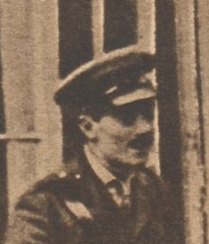
Christopher Birdwood Thomson, 1st Baron Thomson, (13 April 1875 – 5 October 1930) was a British Army officer who went on to serve as a Labour minister and peer. He served as Secretary of State for Air under Ramsay MacDonald in 1924 and between 1929 and 1930, when he was killed in the R101 disaster.
Born in Nasik (now Nashik) in the Bombay Presidency of India to a military family, Thomson attended Cheltenham College. His father was Major-General David Thompson, R.E., and his mother was the daughter of Major-General Christopher Birdwood; Field Marshal The 1st Baron Birdwood was another grandson of Major-General Birdwood.
After graduating from the Royal Military Academy, Woolwich, in 1894, Thomson was commissioned into the Royal Engineers. He served first in Mauritius and then saw action during the Second Boer War (1899–1902), during which he was in command of a field company section and was mentioned in dispatches. He also had his first encounter with aviation when he was detailed to help with the R.E. Balloon Section outside Kimberley. After the war, he became an instructor at the School of Military Engineering at Chatham and then in Sierra Leone. He was promoted to captain and brevet major in 1904, and in 1909 joined the Army Staff College in Camberley. In 1911, he went to the War Office, and in 1912 Thomson was appointed military attaché with the Serbian army during the first and Second Balkan Wars, after which he returned to the War Office in 1913.
During the First World War, Thomson first served at the British Expeditionary Force Headquarters and was Chief Military Interpreter between Sir John French and General Joffre. In 1915 he was sent to Bucharest as military attaché on Kitchener's initiative to bring the Kingdom of Romania into the war. But when there he quickly formed the view that an unprepared and ill-armed Romania facing a war on three fronts against Austria-Hungary, Turkey and Bulgaria would be a liability rather than an asset to the allies. This view was brushed aside by Whitehall, and he signed a Military Convention with Romania on 13 August 1916. By the end of 1916, he had to alleviate the consequences of Romania's capitulation, and he supervised the destruction of the Romanian oil wells to deny them to the German Empire.
文字: “Christopher Thomson, 1st Baron Thomson”, 来自自由的百科全书维基百科,许可协议为 CC BY-SA 4.0. 日期与资料:维基数据。
馆藏
1 图书