作者
E. W. Watkin
1819–1901
- 出生
- 1819年9月26日, 索尔福德
- 逝世
- 1901年4月13日, Northenden
- 国籍
- 大不列颠及爱尔兰联合王国
- 职业
- 政治人物, 企业家 和 藏书家
生平与作品
维基百科暂无该作者的中文条目。 以下为英语原文。
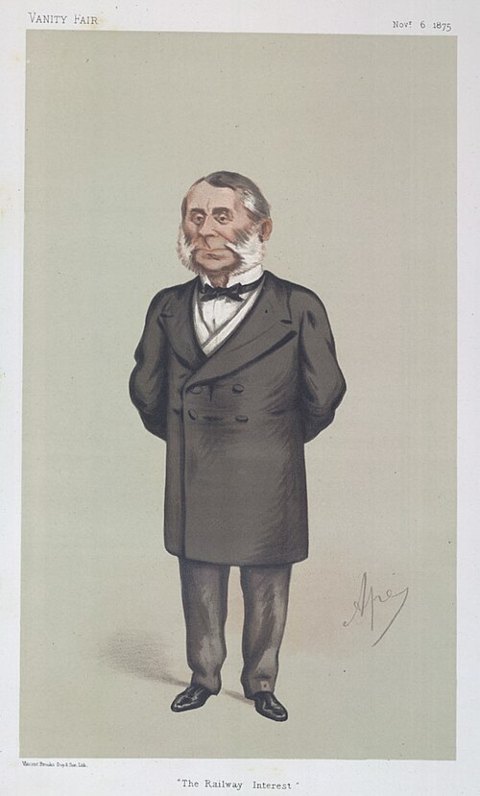
Sir Edward William Watkin, 1st Baronet (26 September 1819 – 13 April 1901) was a British Member of Parliament and railway entrepreneur. He was an ambitious visionary, and presided over large-scale railway engineering projects to fulfil his business aspirations, eventually rising to become chairman of nine different British railway companies.
Among his more notable projects were: his expansion of the Metropolitan Railway, part of today's London Underground; the construction of the Great Central Main Line, a purpose-built high-speed railway line; the creation of a pleasure garden with a partially constructed iron tower at Wembley; and a failed attempt to dig a Channel Tunnel under the English Channel to connect his railway empire to the French rail network.
Early life
Watkin was born in Salford, Lancashire, the son of wealthy cotton merchant Absalom Watkin,. After a private education, Watkin worked in his father's mill business. Watkin's father was closely involved in the Anti-Corn Law League, and Edward soon joined him, rising to become a key League organiser in Manchester. Through this work, Watkin gained the friendship of the Radical leader Richard Cobden, with whom he remained in contact for the rest of Cobden's life.
From 1839 to 1840 Watkin was one of the directors of the Manchester Athenaeum. In 1843 he wrote a pamphlet entitled "A Plea for Public Parks" and was involved in a committee which successfully sought the provision of parks in Manchester and Salford. He also took a prominent role in the Saturday Half-holiday Movement. In 1845, Watkin co-founded the Manchester Examiner, by which time he had become a partner in his father's business.
文字: “Edward Watkin”, 来自自由的百科全书维基百科,许可协议为 CC BY-SA 4.0. 日期与资料:维基数据。
馆藏
E. W. Watkin的图书
1 图书