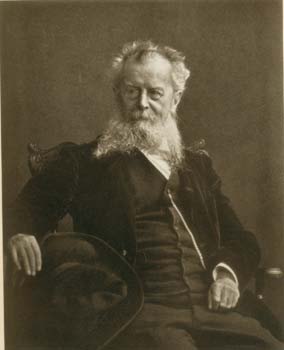
作者
Felix Dahn
1834–1912
- 出生
- 1834年2月9日, 汉堡
- 逝世
- 1912年1月3日, 弗罗茨瓦夫
- 国籍
- 汉堡
- 职业
- 作家, 法学家, 诗人, 历史学家 和 大学教师
生平与作品
维基百科暂无该作者的中文条目。 以下为英语原文。
Felix Ludwig Julius Dahn (9 February 1834 – 3 January 1912) was a German law professor and nationalist author, poet and historian.
Biography
Felix Ludwig Julius Dahn was born in Hamburg as the oldest son of Friedrich (1811–1889) and Constanze Dahn who were notable actors at the city's theatre. The family had both German and French roots. Dahn began his studies in law and philosophy at the Ludwig-Maximilians-Universität München (he had moved there with his parents in 1834), and graduated as Doctor of Laws at the Friedrich Wilhelm University of Berlin. After his habilitation treatise, Dahn became a lecturer of German Law at the Ludwig-Maximilians-Universität München in 1857. In 1863, he became senior lecturer/associate professor at the University of Würzburg and received a professorship at the University of Königsberg in 1872.
Dahn was married to the artist Sophie Fries (1835–1898), with whom he had a son. He tutored baroness Therese von Droste-Hülshoff, a relative of the poet Annette von Droste-Hülshoff, in poetry from 1867 and entered an illicit love affair with her, which he gave a literary treatment in his Sind Götter? (1874). He divorced his wife and married Therese, against opposition from both families, in 1873.
Dahn relocated to University of Breslau in 1888, again as a full professor, and was elected rector of the university in 1895. As rector, he enforced a ban on Polish student associations.
Bibliography
1861–1911 Die Könige der Germanen (Germanic Kings, 11 parts)
1865 Prokopius von Cäsarea. Ein Beitrag zur Historiographie der Völkerwanderung und des sinkenden Römertums (Procopius of Caesarea)
文字: “Felix Dahn”, 来自自由的百科全书维基百科,许可协议为 CC BY-SA 4.0. 日期与资料:维基数据。
馆藏
Felix Dahn的图书
2 图书