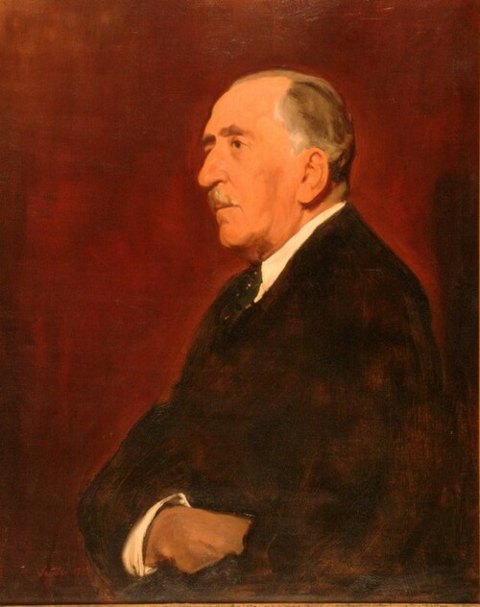
Ferenc Herczeg (born Franz Herzog, 22 September 1863 in Versec, Kingdom of Hungary, Austrian Empire – 24 February 1954 in Budapest, Hungary) was a Hungarian playwright and author who promoted conservative nationalist opinion in his country. He was nominated for the Nobel Prize in Literature three times.
Career
He founded and edited the magazine Új Idők ("New Times") in 1895. In 1896, he was elected to parliament, and in 1901, he became the president of the Petőfi Society.
Dream Country (1912), one of his more prominent novels, tells how the love affair of an American business magnate and a Hungarian adventuress ends in jealousy and murder in the course of a yacht tour from Athens and Istanbul to Venice. In 1925, 1926 and 1927, he was nominated for the Nobel prize for The Gates of Life (1919), a historical novel about archbishop Tamás Bakócz, the only Hungarian aspirant to the papal throne, set in 16th-century Rome.
One major recurring theme of his novels is the conflict of a rich heir with his brother, cousin or rival who has been cheated of his lawful rights (Huszt of Huszt 1906, The Two Lives of Magdalena 1917, Northern Lights 1930).
In 1949, Herczeg sued movie studio MGM, producer Joe Pasternak and screenwriters Walter Reisch and Leo Townsend (author) for $200,000 over the 1942 movie Seven Sweethearts, claiming they had plagiarized his play Seven Sisters, which he had written in 1903 and which Paramount Pictures had adapted into The Seven Sisters a 1915 movie starring Madge Evans.
Film adaptations
The Seven Sisters, 1915, United States, directed by Sidney Olcott