作者
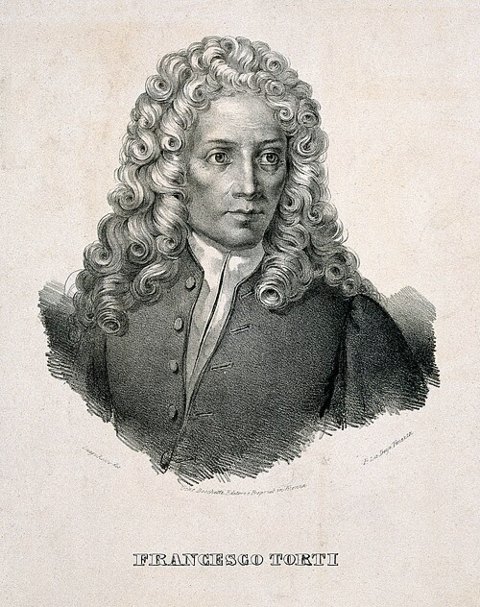
Francesco Torti
1658–1741
- 出生
- 1658年11月30日, 摩德纳
- 逝世
- 1741年2月15日, 摩德纳
- 国籍
- 摩德納和雷焦公國
- 职业
- 医生 和 大学教师
生平与作品
维基百科暂无该作者的中文条目。 以下为英语原文。
Francesco Torti (30 November 1658 – 15 February 1741) was an Italian physician.
Biography
Torti was born in Modena and studied at the University of Bologna, graduating in 1678. In 1670 he and Bernardino Ramazzini headed the department of medicine in the newly created University of Modena. Under the patronage of the Duke of Modena, he instituted an amphitheater for anatomical observations.
He was the first to systematically study the effect of cinchona in the treatment of malaria. He prescribed a dosage that continued for a period of eight days beyond the febrile stage of malaria. As a physician, he was consulted by written correspondence by noblemen across Europe and a collection of 329 of his case studies were published into a two volume work in 2000. His major work was the Therapeutice Specialis ad Febres Quasdam Perniciosas (1712, online). Torti was the first to demonstrate the effectiveness of cinchona bark in the treatment of malaria. He was elected Fellow of the Royal Society in 1717. Although some sources consider him to have introduced the word "malaria", he never used the term in his writings. It was used mainly in folk medicine in Italy and appears even earlier in the writings of Florence Leonardo Bruni (1476).
Apart from medical writings, Torti also wrote poetry. Although married twice, he had no children. His manuscripts are archived in the Biblioteca Estense. He was buried in the church of Santa Maria della Pomposa, Modena and a square is named after him in Modena. A biography was written by his fellow Modenese, Muratori.
文字: “Francesco Torti”, 来自自由的百科全书维基百科,许可协议为 CC BY-SA 4.0. 日期与资料:维基数据。
馆藏
Francesco Torti的图书
1 图书