Idoj de Orfeo
在线阅读 查看图书
作者
1865–1945
维基百科暂无该作者的中文条目。 以下为英语原文。
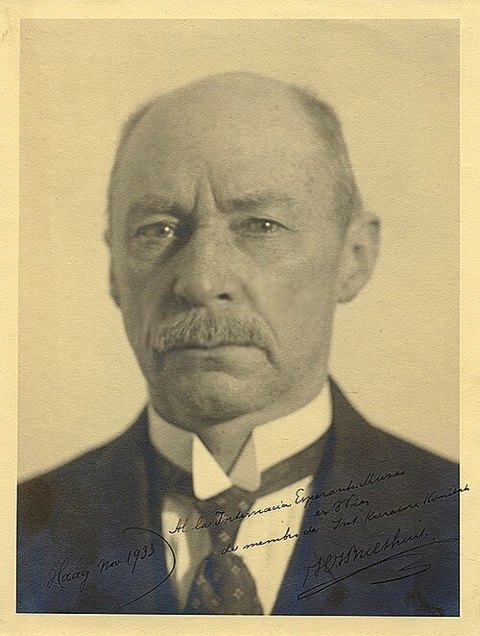
Hendrik Jan Bulthuis (15 September 1865, in Warffum – 27 April 1945, in Noordbroek) was a Dutch customs official, author, and translator of more than thirty works into Esperanto. One of his novels, Idoj de Orfeo (Children of Orpheus) is listed in William Auld's Basic Esperanto Reading List.
Born in the province of Groningen in northeast Netherlands, Bulthuis was a customs officer by profession from 1889 until 1924. In his youth he was a Volapükist. In 1899 he received a diploma in Volapük as a master teacher (Esperanto: ĉefinstruisto). His third son, Rico Bulthuis (The Hague 1911 - 2009) became a respected author who said of his father: "He spoke nine languages, but in none of these languages ever had a conversation with me".
In 1901 D. Uitterdijk sent him a textbook of Esperanto, after which he became an Esperantist. He engaged in much correspondence with Esperantists of other countries, did much Esperanto publicity, especially in The Hague, taught courses, and served as the secretary of the examinations committee from its establishment until the present. From 1910 on L. K. In latter years he worked only for Esperanto; as a novelist (of works originally in Esperanto), a translator and author of small booklets, Bulthuis has been one of the most enduring workers in Esperanto.
Starting in 1907, when his translation from French of Two Tickets (Du Biletoj) by Florian appeared, he published 35 books and brochures.
Never is Better than Late, a comedy translated from English, seemingly his first printed work, appeared in the lit. appendix of L. I. (International Language) in 1905. He became known mainly for a trio of original works. The Children of Orpheus, 1923, despite some implausibilities, marked its author as a clear stylist and a person of outstanding storytelling talent. It still remains perhaps the most popular of his magnum opi. That was followed by the naively simple Joseph and Potifer's Wife, 1926, and The Fuzzy Hand, 1928, an intimately aware picture of Dutch peasant life, in which Bulthuis's inclination for non-veresimilitude is still evident.
文字: “Hendrik Bulthuis”, 来自自由的百科全书维基百科,许可协议为 CC BY-SA 4.0. 日期与资料:维基数据。
馆藏
1 图书