作者
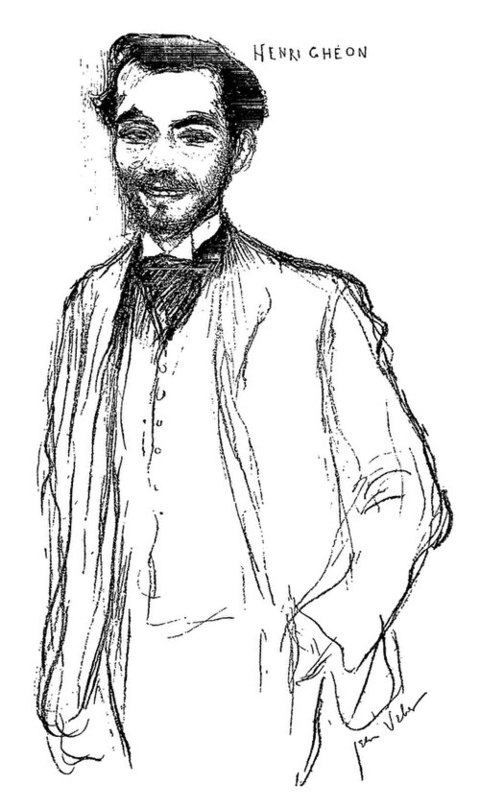
Henri Ghéon
1875–1944
- 出生
- 1875年3月15日, 塞纳河畔布赖
- 逝世
- 1944年6月13日, 巴黎
- 国籍
- 法国
- 职业
- 诗人, 剧作家, 医师作家, 文学评论家 和 传记作家
生平与作品
维基百科暂无该作者的中文条目。 以下为英语原文。
Henri Ghéon (15 March 1875 – 13 June 1944), born Henri Vangeon in Bray-sur-Seine, Seine-et-Marne, was a French playwright, novelist, poet and critic.
Biography
Brought up by a devout Roman Catholic mother, he lost his faith in his early teens, while still at the Lycée in Sens. Among the factors that brought this about, one stood out in his own mind: at school religion was taught without life or understanding. Ghéon did not miss it. As F. J. Sheed says, "His was a happy atheism." He replaced Catholicism with a semi-pagan cult of beauty in all its forms — nature, literature, music, painting.
He moved to Paris in 1893 to study medicine. Around the same time, he started to write poetry, along with his colleagues Francis Jammes and Stéphane Mallarmé. He also published avant garde criticism. In 1887 he met André Gide, who became his literary guide and friend for twenty years. Ghéon, writes Gide's biographer Alan Sheridan, "was Gide's closest friend and companion on innumerable homosexual exploits." Ghėon actually drafted a militant text in favour of homosexuality, La Vie secrète de Guillaume Arnoult, which was one of the inspirations for Gide's Corydon. In 1909 they were founding members of the Nouvelle Revue Française (NRF). Ghéon also painted, studied music and travelled widely.
It was the sceptic Gide who occasioned the first cracks in Ghéon's paganism when he invited him to visit Florence with him in 1912. There Ghéon discovered the religious art of Giotto and Fra Angelico and was overwhelmed to the point of shedding tears. "At St Mark's," he wrote, "with Christ dying on the cross and the Virgin waiting for the angel in a bare and silent corridor..., even our senses had a soul. Art had transported me before, but never so high."
文字: “Henri Ghéon”, 来自自由的百科全书维基百科,许可协议为 CC BY-SA 4.0. 日期与资料:维基数据。
馆藏
Henri Ghéon的图书
1 图书