作者
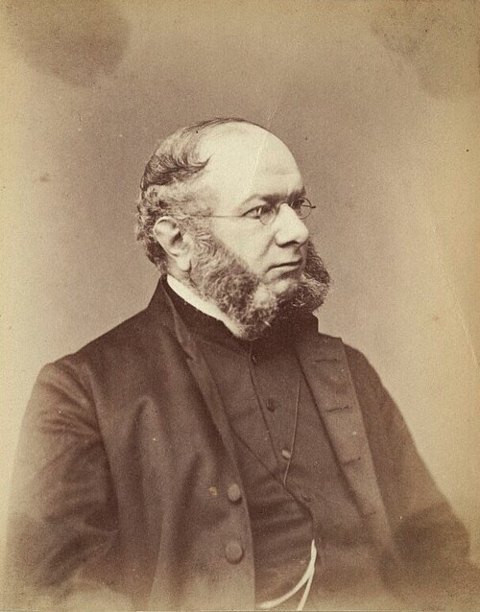
Henry Longueville Mansel
1820–1871
- 出生
- 1820年10月6日, Cosgrove
- 逝世
- 1871年7月1日
- 国籍
- 大不列颠及爱尔兰联合王国
- 职业
- 哲学家 和 作家
生平与作品
维基百科暂无该作者的中文条目。 以下为英语原文。
Henry Longueville Mansel (6 October 1820 – 30 July 1871) was an English philosopher and ecclesiastic.
Life
He was born at Cosgrove, Northamptonshire (where his father, also Henry Longueville Mansel, fourth son of General John Mansel, was rector). He was educated at Merchant Taylors' School, London and St John's College, Oxford. He took a double first in 1843, and became tutor of his college. He was appointed reader in moral and metaphysical philosophy at Magdalen College in 1855, and Waynflete Professor of Metaphysical Philosophy in 1859. He was a great opponent of university reform and of the Hegelianism which was then beginning to take root in Oxford. In 1867 he succeeded Arthur Penrhyn Stanley as regius professor of ecclesiastical history, and in 1868 he was appointed dean of St Paul's. He died in Cosgrove on the first of July 1871.
Work
The philosophy of Mansel, like that of Sir William Hamilton, was mainly due to Aristotle, Immanuel Kant and Thomas Reid. Like Hamilton, Mansel maintained the purely formal character of logic, the duality of consciousness as testifying to both self and the external world, and the limitation of knowledge to the finite and "conditioned." His doctrines were developed in his edition of Aldrich's Artis logicae rudimenta (1849) – his chief contribution to the reviving study of Aristotle – and in his Prolegomena logica: an Inquiry into the Psychological Character of Logical Processes (1851, 2nd ed. enlarged 1860), in which the limits of logic as the "science of formal thinking" are rigorously determined.
文字: “Henry Longueville Mansel”, 来自自由的百科全书维基百科,许可协议为 CC BY-SA 4.0. 日期与资料:维基数据。
馆藏
Henry Longueville Mansel的图书
1 图书