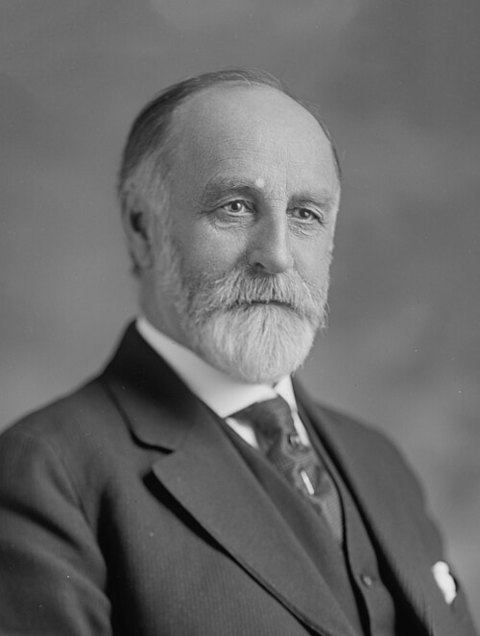
Jesse Walter Fewkes (November 14, 1850 – May 31, 1930) was an American anthropologist, archaeologist, writer, and naturalist.
Early life and education
Fewkes was born in Newton, Massachusetts on November 14, 1850, and initially trained as a zoologist at Harvard University. He later turned to ethnological studies of the Native American tribes in the American Southwest.
He married Florence Gorges Eastman in 1883. After Eastman's death in 1888, Fewkes went on to marry Harriet Olivia Cutler in 1893.
Career
In 1889, with the resignation of noted ethnologist Frank Hamilton Cushing, Fewkes became leader of the Hemenway Southwestern Archaeological Expedition, named for its patron Mary Hemenway. While with this project, Fewkes documented the existing lifestyle and rituals of the Zuni and Hopi tribes. He also recorded the music and languages of the people.
Fewkes was the first man to use a phonograph to record Indigenous people for study. He first tested its use among the Passamaquoddy in present-day Maine. When he traveled to the Southwest United States with the Hemenway expedition, he used a phonograph to record music of the Zuni (1890) and Hopi (1891). Benjamin Ives Gilman used these recordings to show that the people used musical intervals unlike those in the Western tempered scale. In addition to making the recordings, Fewkes wrote historically valuable descriptions of the music and musical practice.
Fewkes surveyed the ruins of a number of cultures in the Southwest, and wrote many articles and books about them. He supervised the excavation of Casa Grande in southern Arizona, a Hohokam site, and the Mesa Verde dwellings in southern Colorado, an Ancient Pueblo site.