生平与作品
维基百科暂无该作者的中文条目。 以下为英语原文。
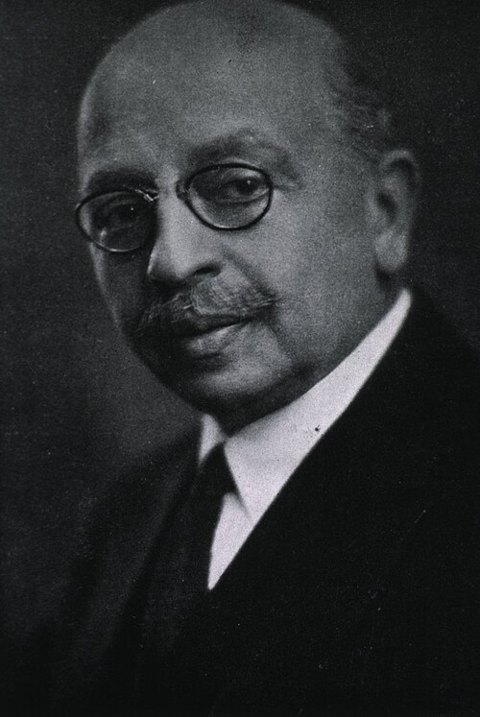
Joseph Jastrow (January 30, 1863 – January 8, 1944) was an American psychologist who contributed to experimental psychology, design of experiments, and psychophysics. He also worked on the phenomena of optical illusions, and a number of optical illusions (notably the Jastrow illusion) that were either first reported in or popularized by his work. Jastrow believed that everyone had their own, often incorrect, preconceptions about psychology. One of his ultimate goals was to use the scientific method to identify truth from error, and educate the general public, which Jastrow accomplished through speaking tours, popular print media, and the radio.
Biography
Jastrow was born in Warsaw, Poland. A son of Talmud scholar Marcus Jastrow, Joseph Jastrow was the younger brother of the orientalist, Morris Jastrow, Jr. Joseph Jastrow came to Philadelphia in 1866 and received his bachelor's and master's degrees from the University of Pennsylvania. During his doctoral studies at Johns Hopkins University, Jastrow worked with C. S. Peirce on experiments in psychophysics that introduced randomization and blinding for a repeated measures design. Though Peirce had to leave the university due to a personal scandal, Jastrow continued to advance his own research despite Peirce’s departure. From 1888 until his retirement in 1927, Jastrow was a professor at the University of Wisconsin–Madison, where he advised Clark L. Hull. He was a lecturer at the New School of Social Research from 1927 to 1933.
Jastrow was head of the psychological section of the World's Columbian Exposition in 1893, where he collected "psychophysical and reaction time data" from thousands of attendees. He was one of the charter members of the American Psychological Association, and eventually became the president in 1900.
文字: “Joseph Jastrow”, 来自自由的百科全书维基百科,许可协议为 CC BY-SA 4.0. 日期与资料:维基数据。
馆藏
Joseph Jastrow的图书
1 图书