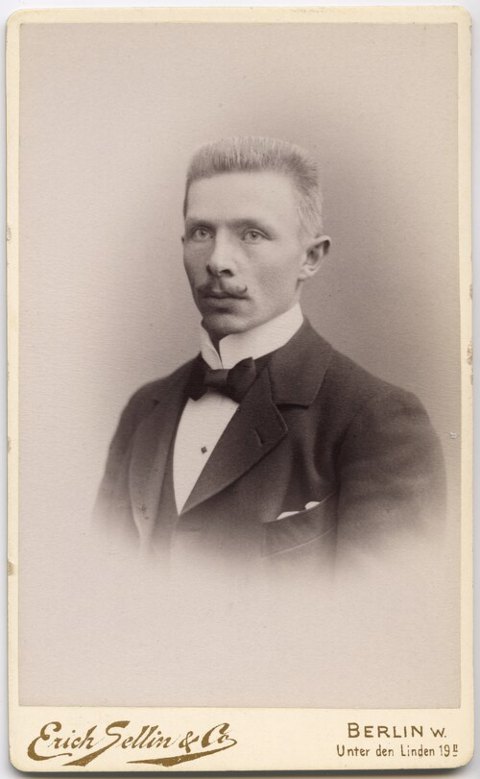
作者
Julius Edvard Ailio
1872–1933
- 出生
- 1872年7月19日, 洛皮
- 逝世
- 1933年3月4日, 赫尔辛基
- 国籍
- 芬兰 和 芬兰大公国
- 职业
- 政治人物 和 考古学家
生平与作品
维基百科暂无该作者的中文条目。 以下为英语原文。
Julius Ailio (19 July 1872 – 4 March 1933) was a Finnish archaeologist and a Social Democratic politician. His archaeological work involved the Stone Age and Early Metal Age in Karelia, especially the isthmus.
Biography
On 19 July 1872, Ailio was born in Loppi, Grand Duchy of Finland, Russian Empire to a school teacher and future Social Democratic member of Finnish parliament.
In 1906, he excavated Räisälä Papinkangas. Between 1909 and 1912, he excavated dwelling sites Riukjärvi and Piiskunsalmi. He also researched shore displacement at Lake Ladoga, creating the first model of its history, a history late 19th-century geologists and archaeologists had already found unique for its deviation from the standard land uplift model. In 1909 and 1910, he with Kaarle Soikkeli salvage excavated Häyrynmäki in Viipuri Province. From his 1909 excavations he first identified the Kiukainen culture and Corded Ware as distinct archaeological cultures, referring to the latter as Alastaro pottery. In 1915, he excavated Heinjoki Vetokallio.
In 1917, during Oskari Tokoi's chairmanship of the Senate of Finland, he served in the body with Väinö Tanner, Väinö Voionmaa, Wäinö Wuolijoki, Matti Paasivuori, and six bourgeoise representatives.
In 1921, he expressed study facial features, skin color, and hair structure as less important than the skeleton and inner organs in anthropology. In Fragen der russischen Steinzeit (1922) Ailio responded to Aarne Michaël Tallgren's conceptualization of Russian Bronze Age cultures, being the third Finnish scholar to do so. Timo Salminen characterized it as bitter and an exercise to prove his knowledge for the archaeology professorship at Helsinki University. Ailio did not believe the Comb Ceramic culture and Fat'janavo related. He considered the latter's pottery connected to Central Europe, the Kuban, and the Tripolye culture, but did not know the main origin. He rejected Allgren's assumption of it being primarily Central European and regarded the culture to be a "broader chronological phenomenon". In the article he also considered a Pärnu figurine as a Muttergott (Mother-God) based on similar findings with the Tripolye. In 1923, Ailio rejected the notion Giant's Churches were former Stone Age man-made structures and instead labeled them as shore formations.
文字: “Julius Ailio”, 来自自由的百科全书维基百科,许可协议为 CC BY-SA 4.0. 日期与资料:维基数据。
馆藏
Julius Edvard Ailio的图书
1 图书