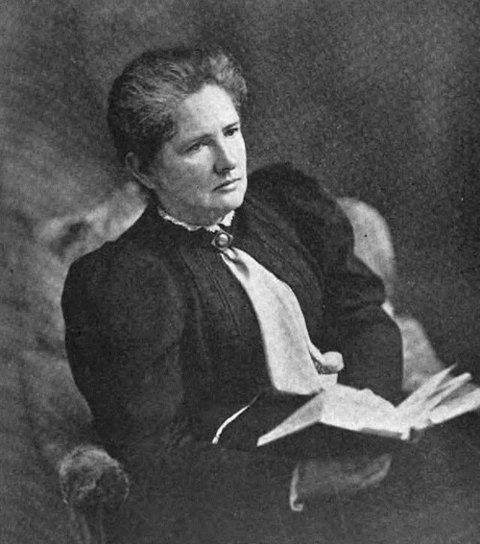
Laura Elizabeth Howe Richards (February 27, 1850 – January 14, 1943) was an American writer. She wrote more than 90 books including biographies, poetry, and several for children. One well-known children's poem is her literary nonsense verse Eletelephony.
Biography
Laura Elizabeth Howe was born in Boston, Massachusetts, on February 27, 1850. Her father was Dr. Samuel Gridley Howe, an abolitionist and the founder of the Perkins Institution and Massachusetts School for the Blind. She was named after his famous deaf-blind pupil Laura Bridgman. Her mother Julia Ward Howe wrote the words to "The Battle Hymn of the Republic".
In 1871, Laura married Henry Richards. He would accept a management position in 1876 at his family's paper mill at Gardiner, Maine, where the couple moved with their three children. In 1917 Laura won a Pulitzer Prize for Julia Ward Howe, 1819-1910, a biography, which she co-authored with her sisters, Maud Howe Elliott and Florence Hall.
She created the boy's club Howe Club in 1886 (which lasted approximately 25 years), and then got involved in many local education projects.
She died on January 14, 1943, at Gardiner, Maine, 44 days before her 93rd birthday.
Legacy
A pre-kindergarten-to-second-grade elementary school in Gardiner, Maine, bears her name. Her children's book Tirra Lirra won the Lewis Carroll Shelf Award in 1959. Her home in Gardiner, the Laura E. Richards House, was listed on the National Register of Historic Places from 1979 until 2024, when it was delisted after a fire on December 24, 2022, resulted in the home needing to be demolished for safety reasons.