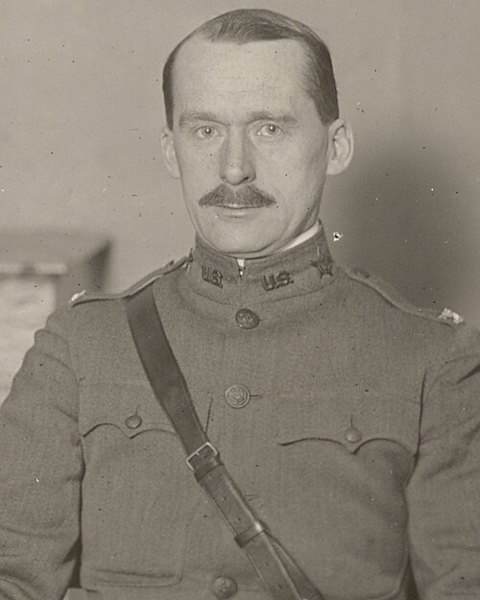
作者
Leonard Porter Ayres
1879–1946
- 出生
- 1879年9月15日, 尼安蒂克
- 逝世
- 1946年10月29日, 克利夫兰
- 国籍
- 美国
- 职业
- 统计学家
生平与作品
维基百科暂无该作者的中文条目。 以下为英语原文。
Leonard Porter Ayres (September 15, 1879 – October 29, 1946) was an American statistician. He played a central role in developing and analyzing large-scale statistical projects, especially for the Russell Sage Foundation. His best-known work dealt with comprehensive statistical studies of American casualties in the first and second world wars.
Early life
Leonard Porter Ayres was born on September 15, 1879, in Niantic, Connecticut, to Georgiana (née Gall) and Milan Church Ayres. His father was a clergymen and journalist, and editor of the Boston Advertiser. He studied at Boston University, earning a B.Ph. degree in 1902, A.M. degree in 1909 and Ph.D. degree in 1910. He also attended the Massachusetts Institute of Technology, Harvard University Summer School, and Teachers College, Columbia University (1907–1909).
Career
He began teaching in 1902 as one of the first to carry American ideas and methods to Puerto Rico. There he was appointed superintendent of schools in the districts of Caguas and San Juan, and in 1906 became general superintendent of all the public schools on the island. He founded the Insular Bureau of Statistics.
Returning to live in the United States, Ayres was made head of the division of statistics in the Playground Association of America. Beginning in 1908, he was prominently identified with the work of the Russell Sage Foundation, especially as chairman of the committee in charge of the Backward Children Investigation. He co-authored a highly influential book on Laggards in Our Schools (1909) with Luther Halsey Gulick. They argued that the most important causes of retardation were environmental. He continued his studies of intelligence tests, and drafted widely adopted recommendations for yardsticks of student progress on intelligence tests for the elementary schools. Ayres found that curricula were typically fitted for the brightest rather than average student. He found that schools with low withdrawal rates were most efficient and economical. Historian Raymond Callahan has characterized as "mechanical" his methods of dealing with student retardation, elimination, and promotion. Furthermore he largely ignored social and educational factors, and he used non-comparable data.
文字: “Leonard Porter Ayres”, 来自自由的百科全书维基百科,许可协议为 CC BY-SA 4.0. 日期与资料:维基数据。
馆藏
Leonard Porter Ayres的图书
1 图书