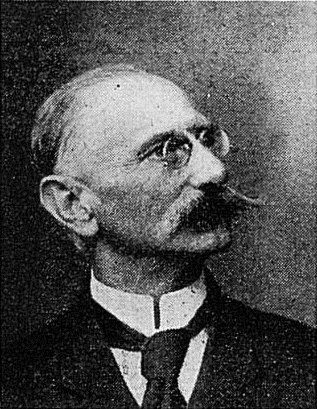
Maurice Le Glay (1868 – 3 April 1936) was a French Army officer and author of works on Morocco. He served as an artillery and political officer in Algeria, Tunisia and Morocco before retiring to a civil post in 1918 so that he could begin a literary career. He wrote numerous journal articles and several books including a description of the French defeat at the Battle of El Herri. He was a strong admirer of the Berber people, though he was criticised for inspiring the political division of the Berber and Arab peoples in Morocco. He retired to Casablanca, where he died and was honoured with a street named in his memory.
Military career
Maurice Le Glay was born in Bordeaux in 1868. At the age of 19, he enlisted in the French Army. He studied as an officer-cadet at the School of Artillery and Engineering in Fontainebleau and, after being commissioned as an officer, served with the army in Algeria and Tunisia. By 1909 he had become a Captain and was posted to Morocco for the first time. He was part of the military mission responsible for overseeing the army of the Moroccan Sultan. He took part in the Zaian War against the Berbers to bring French rule to the Middle Atlas, fighting alongside Moroccan goumiers and serving as General Hubert Lyautey's political officer (advisor on relations with the Moroccan people).
Literary career
Le Glay left the army in 1918 and became the civil controller of Safi, intending to pursue a literary career. His sketches and stories of Morocco quickly became famous and one of his stories became the inspiration for the 1934 film, Itto. In Les Sentiers de la Guerre et le Famour he tells the story of the French defeat at the Battle of El Herri in the Zaian War and praises the leadership skills of Mouha ou Hammou Zayani. He is also known for his compelling writing in Marocains de la Plaine et des Monts. He had numerous articles published in journals such as La Vigie Marocaine and the Bulletin de Fenseignement Public. Le Glay inspired and was patron of a number of other authors on Moroccan life including Moses Nahon, Thomas Lonie, Said Guennoun, René Eulogius and Henri Duquaire.