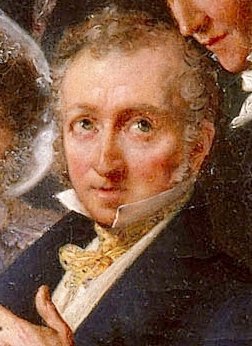
作者
Népomucène-Louis Lemercier
1771–1840
- 出生
- 1771年4月21日, 巴黎
- 逝世
- 1840年6月7日, 巴黎
- 国籍
- 法国
- 职业
- 诗人, 作家 和 剧作家
生平与作品
维基百科暂无该作者的中文条目。 以下为英语原文。
Louis Jean Népomucène Lemercier (20 April 1771 – 7 June 1840) was a French poet and playwright.
Life
Lemarcier was born in Paris. His father had been intendant successively to the duc de Penthièvre, the comte de Toulouse and the unfortunate princesse de Lamballe, who was the boy's godmother. Lemercier was a prodigy; before he was sixteen his tragedy of Méléagre was produced at the Théâtre Français. Clarisse Harlowe (1792) provoked the criticism that the author was "pas assez roué pour peindre les roueries" (not enough scamp to depict scamp tricks.) Le Tartufe révolutionnaire a parody full of bold political allusions, was suppressed after the fifth performance.
In 1795, Lemercier's masterpiece Agamemnon, called by Charles Lafitte the last great antique tragedy in French literature, was produced. It was a great success, but was violently attacked later by Julien Louis Geoffroy who stigmatized it as a bad caricature of Prosper Jolyot de Crébillon. Les quatre métamorphoses (1799) was written to prove that the most indecent subjects might be treated without offence.
The Pinto (1800) was the result of a wager that no further dramatic innovations were possible after the comedies of Pierre Beaumarchais.
It is a historical comedy on the subject of the Portuguese Revolution of 1640.
This play was construed as casting reflections on the first consul Napoleon, who had hitherto been a firm friend of the avowed republican Lemercier. His extreme freedom of speech finally offended Napoleon, and the quarrel proved disastrous to Lemercier's fortune for the time.
文字: “Népomucène Lemercier”, 来自自由的百科全书维基百科,许可协议为 CC BY-SA 4.0. 日期与资料:维基数据。
馆藏
Népomucène-Louis Lemercier的图书
1 图书