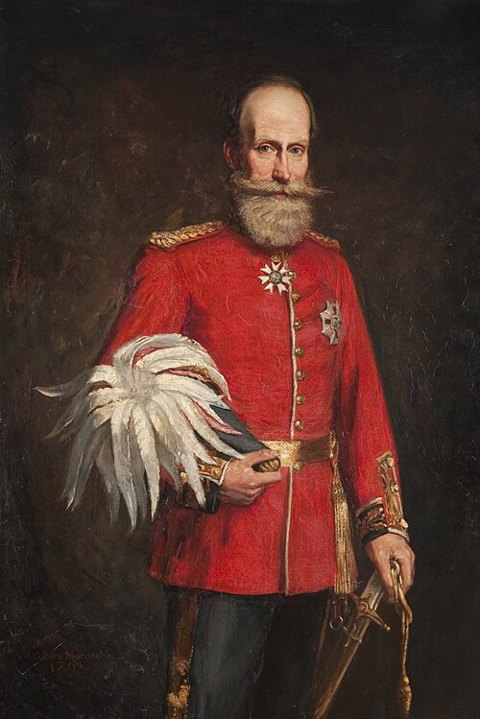
作者
R. Murdoch Smith
1835–1900
- 出生
- 1835年8月18日, 基马诺克
- 逝世
- 1900年7月3日, 爱丁堡
- 国籍
- 大不列颠及爱尔兰联合王国
- 职业
- 工程师, 人类学家, 考古学家, 外交官 和 士兵
生平与作品
维基百科暂无该作者的中文条目。 以下为英语原文。
Major General Sir Robert Murdoch Smith (18 August 1835 – 3 July 1900) was a Scottish engineer, archaeologist and diplomat. He is known for his involvement with the excavation of antiquities found at Knidos and Cyrene, the telegraph to Iran, Persian antiquities bought for the Victoria and Albert Museum, and for serving as Director of the Edinburgh Museum of Science and Art.
Early life
Smith was born on 18 August 1835 in Bank Street, Kilmarnock. He was the second child of Jean (born Murdoch) and Dr Hugh Smith. He attended Kilmarnock Academy and went on to spend four years at Glasgow University. He found moral philosophy vague, but excelled at science, in which his lecturers included the young Lord Kelvin.
Smith joined the British Army (Royal Engineers) during the Crimean War and out of the 380 candidates who took the entry exam he came first. In September 1855, Smith was gazetted to Lieutenant and in the following October was chosen to lead a small group of Royal Engineers bound to help Charles Thomas Newton's archaeological mission to the remains of the ancient civilisation at Knidos in Turkey.
Archaeology
The Lion of Knidos was found in 1858 by the architect Richard Popplewell Pullan near where he was helping Newton's Knidos excavations. Smith's role was significant as he was presented with a large statue that had fallen onto its front face on a high cliff and it was Smith who discovered the location of the mausoleum. The limestone core of a monument was still there but the marble had been moved or stolen. Other pieces of worked stone lay around where they had been abandoned. Smith was able to replace, examine and move each of the remaining stones, and to create a detailed report on the supposed construction and its historical context. This allowed Pullen to sketch what is thought to be a good reproduction of what the whole mausoleum would have looked like. The Lion of Knidos was loaded onto the naval ship HMS Supply and shipped to London, where it is now held in the British Museum.
文字: “Robert Murdoch Smith”, 来自自由的百科全书维基百科,许可协议为 CC BY-SA 4.0. 日期与资料:维基数据。
馆藏
R. Murdoch Smith的图书
1 图书