作者
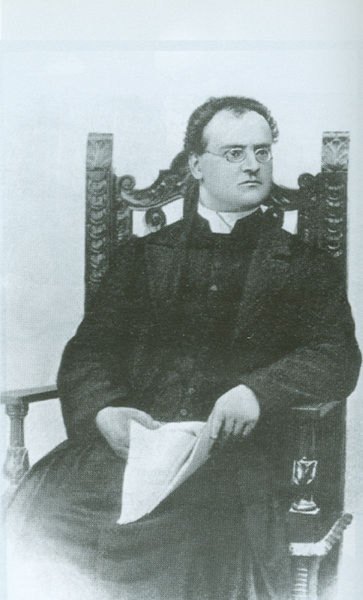
Romolo Murri
1870–1944
- 出生
- 1870年8月27日, 蒙泰圣皮耶特兰杰利
- 逝世
- 1944年3月12日, 罗马
- 国籍
- 意大利王国
- 职业
- 天主教神父, 政治人物 和 舆论记者
生平与作品
维基百科暂无该作者的中文条目。 以下为英语原文。
Romolo Murri (27 August 1870 – 12 March 1944) was an Italian politician and ecclesiastic. A Catholic priest, he was suspended and later excommunicated for having joined the Lega Democratica Nazionale. For his political activism, he is considered a precursor of Italian Christian democracy and by extension of the Democrazia Cristiana party.
Biography
Murri was born in Monte San Pietrangeli on 27 August 1870. In 1894, he was a promoter of the FUCI, in 1901 of Democrazia Cristiana Italiana and in 1905 of Lega Democratica Nazionale. He founded the publications Vita nova (1895), Cultura sociale (1898), Il domani d'Italia (1901), Rivista di cultura (1906), Il commento (1910).
His activities brought him into controversy with the Holy See, especially after he established the National Democratic League in 1905. Pope Pius X explicitly condemned the movement in 1906 in his encyclical Pieni l'Animo, forbidding all priests from joining it under penalty of suspension a divinis ipso facto.
After failing to comply, Murri was suspended a divinis from his clerical status in 1907. His movement was once again condemned by Pius X in his encyclical Pascendi Dominici gregis, which equated it to modernism, and was finally excommunicated in 1909. On the same year, he was elected to the Chamber of Deputies on the lists of the Italian Radical Party.
In 1912, he married in Rome with Ragnhild Lund, daughter of the former president of Lagting (the upper house of the Norwegian Parliament), with whom he had a son. He failed to be re-elected in 1913, something that was explicitly celebrated by the leader of the Azione Cattolica Count Ottorino Gentiloni. He supported Italy's entry into World War I.
文字: “Romolo Murri”, 来自自由的百科全书维基百科,许可协议为 CC BY-SA 4.0. 日期与资料:维基数据。
馆藏
Romolo Murri的图书
2 图书