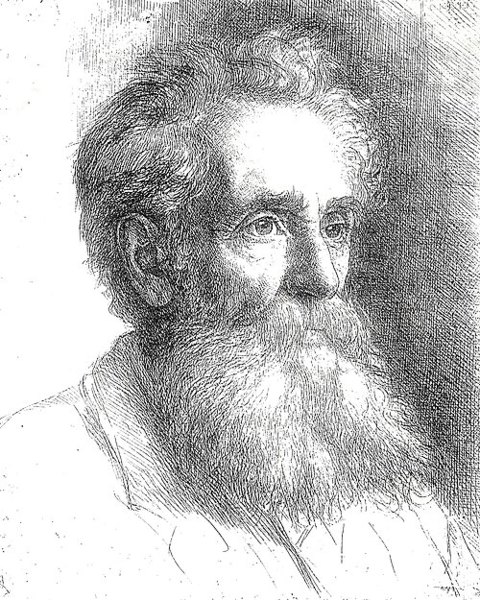
作者
Wilhelm Jerusalem
1854–1923
- 出生
- 1854年10月11日, Dřenice
- 逝世
- 1923年7月15日, 维也纳
- 国籍
- 奥地利
- 职业
- 哲学家, 教授, 心理学家, 语文学家 和 大学教师
生平与作品
维基百科暂无该作者的中文条目。 以下为英语原文。
Wilhelm Jerusalem (Austrian German: [jeˈruːzalɛm]; 11 October 1854, Dřenice – 15 July 1923, Vienna) was an Austrian Jewish philosopher and pedagogue.
Biography
Jerusalem studied classical philosophy at the University of Prague and prepared a doctorate entitled "The Inscription of Sestos and Polybios". Until 1887 he was a teacher at grammar schools in Prague and Nikolsburg. In 1888, he became a member of the staff of teachers at the "k.k. Staatsgymnasium im VIII. Bezirk Wiens" (Bundesgymnasium Wien 8, founded in 1701) in Vienna. In 1891 he was an outside lecturer at the University of Vienna. One of his interests was education, and he demanded changes in the educational system of the Austro-Hungarian monarchy.
Another of his fields of interest was the education of minorities. In 1890 he published a psychological study about the education of deafblind Laura Bridgman. Jerusalem is regarded as the discoverer of the literary talent of the deaf-blind writer Helen Keller who he corresponded with, although they never met personally. From scientific work about the deafblind he developed the Austrian direction of the philosophical method of Pragmatism. In 1907 he translated William James's "Pragmatism" into German.
After World War I he became an associate professor of philosophy and educational theory at the University of Vienna, and in 1919 became one of the teachers of the "Schönbrunner Schule" (Schönbrunn School), which came about after the Vice Mayor of Vienna Max Winter had obtained a considerable part of the Viennese Schönbrunn Palace to be used for the advancement of the education of young women, and a small number of men, to become educators and teachers.
文字: “Wilhelm Jerusalem”, 来自自由的百科全书维基百科,许可协议为 CC BY-SA 4.0. 日期与资料:维基数据。
馆藏
Wilhelm Jerusalem的图书
1 图书