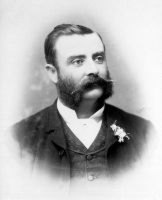
作者
William Pitt
1855–1918
- 出生
- 1855年6月4日, 墨尔本
- 逝世
- 1918年5月25日, 亚博斯福区
- 国籍
- 澳大利亚
- 职业
- 建筑师
- 代表作品
- 公主剧院
生平与作品
维基百科暂无该作者的中文条目。 以下为英语原文。
William Pitt (4 June 1855 – 25 May 1918) was an Australian architect and politician. Pitt is best known as one of the outstanding architects of the "boom" era of the 1880s in Melbourne, designing some of the city's most elaborate High Victorian commercial buildings. He worked in a range of styles including Gothic Revival, Italianate, French Second Empire, and his own inventive eclectic compositions. He had a notable second career after the crash of the 1890s, becoming a specialist in theatres and industrial buildings.
Early life
William Pitt was born in 1855 in Melbourne two years after his parents emigrated to Australia from Sunderland, England. His father, also William Pitt, ran some of the most notable cafes in Melbourne and was a practising artist. Raised in the suburb of St Kilda, he was educated at the Hofwyl School in St Kilda [1] later attended George Henry Neighbour's college in Carlton. He later moved to the suburb of Abbotsford.
Career
In 1875 Pitt was articled to the architect George Browne (1847-1911), who was only eight years older and something of a prodigy himself, designing the Rupertswood mansion, Her Majesty's Ballarat and The Theatre Royal on Bourke Street in the early 1870s, when he was in his mid 20s.
Pitt began his own architectural practice in 1879 at the age of 24 after winning the competition for the Melbourne Coffee Palace Bourke Street (between Swanston and Russell streets). His design of an elaborate Renaissance Revival style facade over five stories set the tone for the level of detail he would lavish on his subsequent boom era designs.
文字: “William Pitt (architect)”, 来自自由的百科全书维基百科,许可协议为 CC BY-SA 4.0. 日期与资料:维基数据。
馆藏
William Pitt的图书
1 图书