A Wikipédia ainda não tem um artigo sobre este autor nesta língua. Abaixo, o texto em inglês.
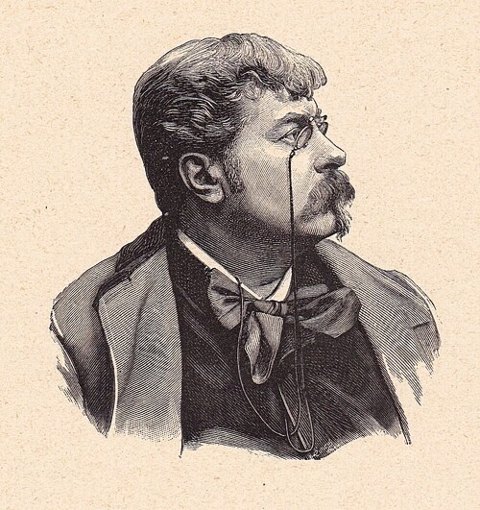
Antoine Louis Camille Lemonnier (French pronunciation: [ɑ̃twan lwi kamij ləmɔnje]; 23 March 1844 – 13 June 1913) was a Belgian writer, poet and journalist. He was a member of the Symbolist La Jeune Belgique group, but his best known works are realist. His first work was Salon de Bruxelles (1863), a collection of art criticism. His best known novel is Un Mâle (1881).
Biography
Lemonnier was born in Ixelles, Brussels.
He studied law, and then took a clerkship in a government office, which he resigned after three years. He published a Salon de Bruxelles in 1863, and again in 1866. His early friendships were chiefly with artists; and he wrote art criticisms with recognized discernment. In 1868 he was a founding member of the Société Libre des Beaux-Arts, an avant-gardist group whose ideals he championed. Taking a house in the hills near Namur, he devoted himself to sport, and developed the intimate sympathy with nature which informs his best work. Nos Flamands (1869) and Croquis d'automne (1870) date from this time. Paris-Berlin (1870), a pamphlet pleading the cause of France, and full of the author's horror of war, had a great success.
His capacity as a novelist, in the fresh, humorous description of peasant life, was revealed in Un Coin de village (1879). In Un Mâle (1881) he achieved a different kind of success. It deals with the amours of a poacher and a farmer's daughter, with the forest as a background. Cachaprès, the poacher, seems the very embodiment of the wild life around him. The rejection of Un Mâle by the judges for the quinquennial prize of literature in 1883 made Lemonnier the centre of a school, inaugurated at a banquet given in his honour on 27 May 1883. Le Mort (1882), which describes the remorse of two peasants for a murder they have committed, provides a vivid representation of terror. It was remodelled as a tragedy in five acts (1899) by its author. Ceux de la glèbe (1889), dedicated to the "children of the soil", was written in 1885.